
A desert operation workover rig configuration checklist should turn heat, dust, ground conditions and remote support into documented purchase requirements. Specify the operating envelope first, then request evidence for cooling, filtration, electrical protection, carrier mobility, mast operating limits and field maintenance. A model designation or a regional sales description does not establish desert suitability.
This guide is for procurement managers, tender engineers and workover contractors evaluating equipment for desert fields in the Middle East, Central Asia and North Africa. Those regions describe the intended application, not a claim of Hubei Link deliveries or project experience. The recommendations below are general engineering and procurement practice, not a statement that any particular equipment option is included or available from Hubei Link Petroleum Equipment.
For the overall model-and-package discussion, see the desert workover rig solutions overview. This checklist focuses on the evidence and acceptance questions behind an environmental specification, rather than ranking models.
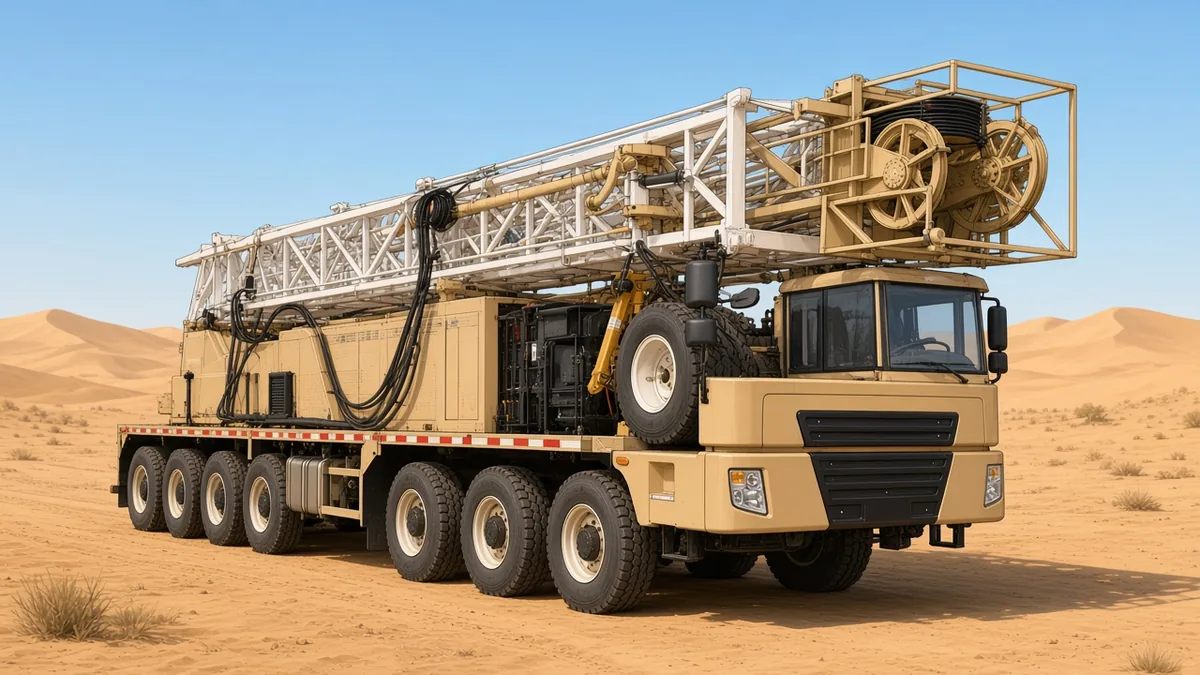
What operating conditions should the buyer define first?
Define the full environmental and duty envelope, not simply “desert package required.” Record the project minimum and maximum ambient temperatures, altitude, solar exposure, dust characteristics, seasonal weather, shift pattern and planned operating cycle. Central Asian desert projects may also need a separate cold-start and winter review; a high-temperature review alone does not cover the annual envelope.
Distinguish air temperature at the site from the conditions around a radiator intake or inside a control enclosure. Identify prolonged stationary operation, auxiliary loads and any nearby equipment that could recirculate hot exhaust or cooling air. Give suppliers the same basis so that apparently similar offers can be compared fairly.
Keep the well program as a separate prerequisite: tubular schedule, planned operations, calculated maximum hook load, mast and racking requirements, and well-control interfaces. Environmental preparation cannot compensate for an unsuitable lifting system. Use the truck-mounted workover rig selection guide for that upstream decision and request the maximum hook load per project, with its documented conditions.
What cooling evidence is needed for high ambient temperature?
Request a configuration-specific cooling assessment at the stated ambient conditions and duty cycle. Engine power alone does not demonstrate that the installed engine, transmission and hydraulic systems can operate continuously within their limits in a hot, stationary installation.
The supplier response should identify the engine and transmission, heat-rejection requirements, cooling arrangement, fan drive, airflow path and applicable derating. Ask what assumptions were made about altitude, radiator cleanliness, guards, enclosure restrictions and simultaneous auxiliary demand. A component brochure is not automatically evidence for the completed rig installation.
For procurement review, ask for an agreed thermal test procedure with the load profile, ambient measurement location, instrumentation, stabilization criteria, monitored temperatures and acceptance limits. Those limits must come from the applicable OEM documents and the approved system design; this article does not set a universal ambient rating or test duration. If a factory test takes place in milder conditions, require the engineering basis for relating the result to the project environment and record what remains unproven.
Also review maintenance access. Radiator and cooler faces must be inspectable and cleanable using the applicable OEM procedure, without unsafe access near rotating machinery or damaging fins. Ask how the operator will recognize an obstructed cooling stack and what actions the manual requires before an alarm becomes a shutdown. Do not accept a larger radiator as proof of suitability without the system assessment.
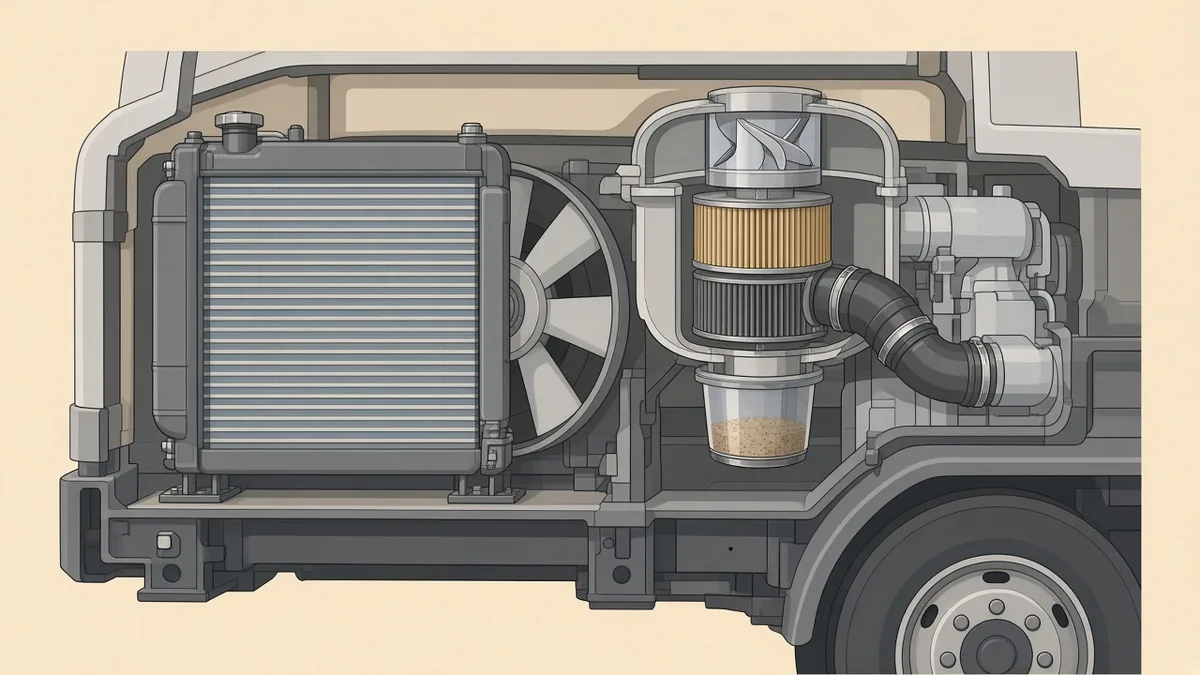
How should air intake and sand filtration be specified?
Specify protection of the complete clean-air path and a measurable service trigger. In dusty service, the review should include the air-cleaner housing, element compatibility, duct joints, seals, clamps, dust evacuation arrangement and access for clean servicing. A high-quality element cannot protect an engine if dust bypasses it through a damaged seal or loose intake duct.
A pre-cleaner or multi-stage arrangement may be considered by the equipment designer for the stated dust burden, but its suitability, restriction and availability must be confirmed for the selected engine installation. It is not an assumed Hubei Link configuration. Request component identification and the engine manufacturer’s allowable intake restriction, including the measurement method and operating condition.
Donaldson’s guidance on servicing air filters by restriction explains why appearance alone is not a replacement criterion and why unnecessary opening of the housing can introduce contamination. Use the installed system’s OEM instructions and restriction limits; do not invent a fixed replacement interval because a site is sandy. Record restriction trends and check for damaged ducts or evidence of dust on the clean side through an approved inspection procedure.
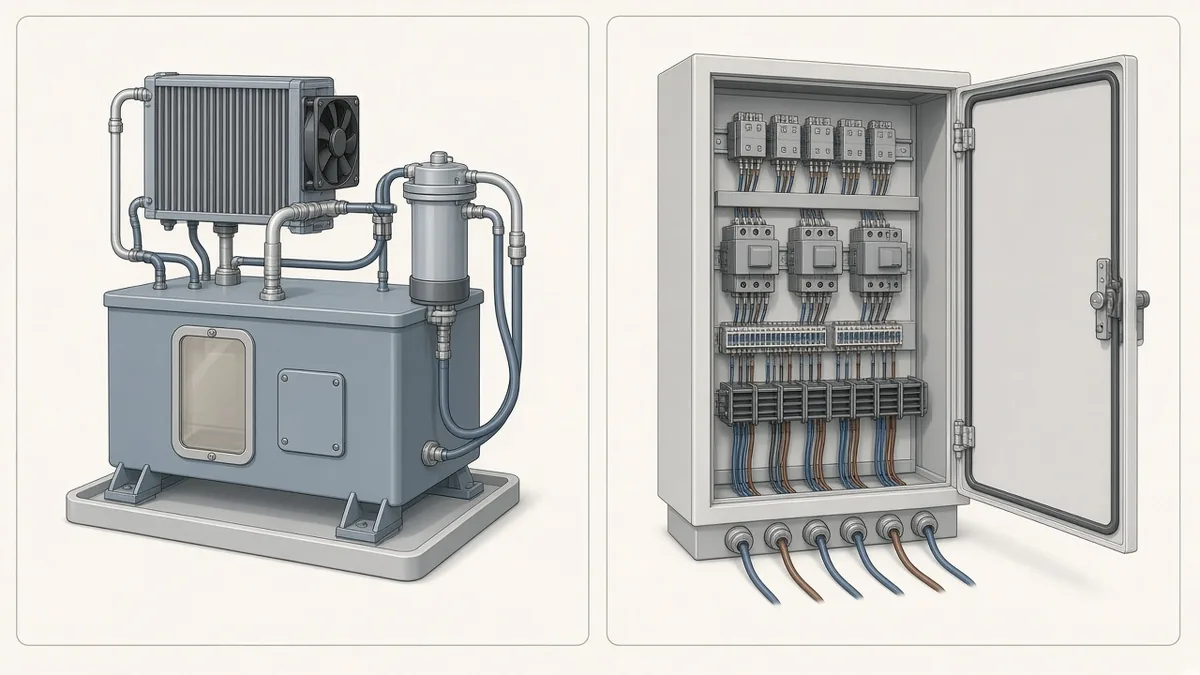
What hydraulic cooling and filtration checks belong in the offer?
Request the hydraulic circuit information, fluid specification and a thermal-and-cleanliness plan matched to the actual functions and duty cycle. Reservoir size by itself is not proof of adequate cooling. Review the heat load, cooler arrangement, airflow access, oil temperature monitoring and the viscosity range required by the installed pumps, valves and seals.
HYDAC’s fluid architecture engineering guidance treats thermal stability and fluid cleanliness as connected system-design issues. It supports reviewing these together, not specifying a particular HYDAC component for a Hubei Link rig.
Ask the designer to document filter locations, element identification, service indicators and the consequences of bypass operation where applicable. Cleanliness targets, filter performance and fluid selection must be derived from the component requirements; this checklist does not prescribe a universal micron rating or oil grade. Include reservoir breathing, protected filling and transfer practices, sampling points, hose condition and protection against contamination during field repairs.
For acceptance, request a baseline fluid-condition record and a demonstration of temperature and filter-condition monitoring where fitted. Any proposed additional cooler, breather or filtration unit must appear explicitly in the signed scope, with its interface and maintenance requirements.
How can electrical cabinets resist dust without trapping heat?
Review dust exclusion and internal temperature together. Inspect enclosure construction, door seals, cable entries, unused openings, connectors and the cooling method. A tightly sealed cabinet still needs a documented thermal assessment for the equipment inside it under solar exposure and the project duty.
Ask for the specified enclosure protection and evidence covering the assembled cabinet, including penetrations and any cooling accessories. Do not infer an ingress-protection classification from its appearance. Dust protection also does not establish suitability for a hazardous area; site area classification and applicable electrical requirements need a separate project review.
Request drawings, an equipment list, allowable component temperatures and service instructions. Include access for inspecting seals and maintaining the proposed cooling arrangement without introducing sand. Alarm and emergency-stop checks should follow a written procedure for the actual control system, performed by authorized personnel; operators should not bypass protective devices to continue working through overheating or contamination faults.
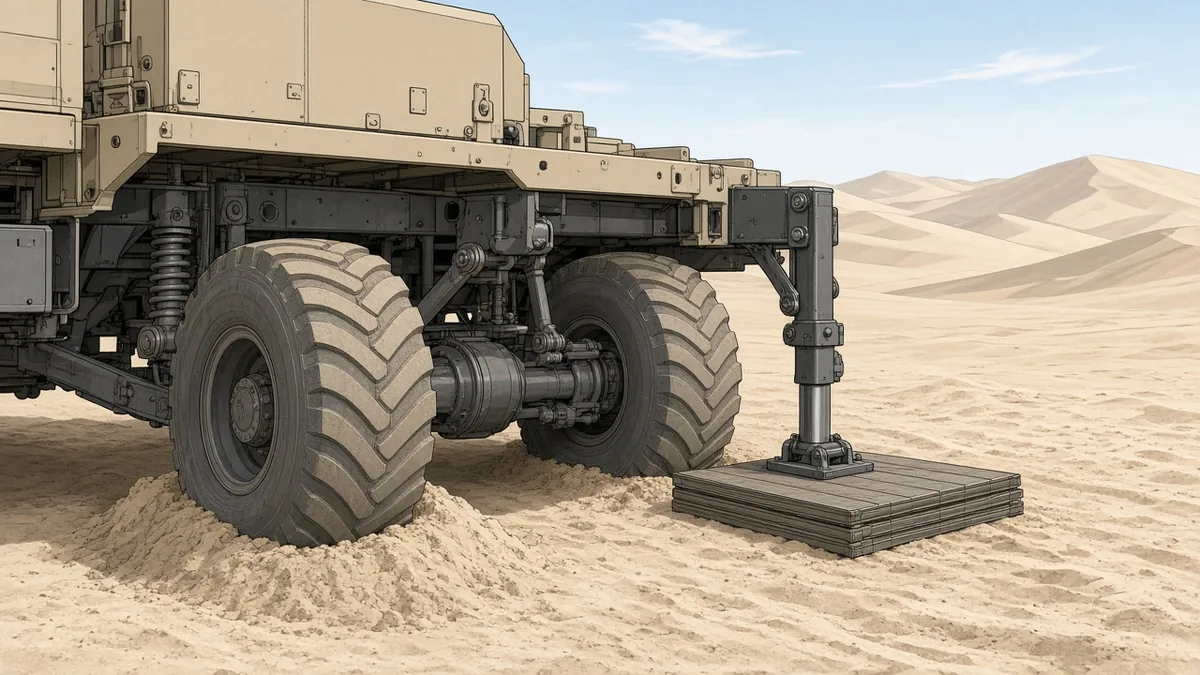
What proves that the carrier can move on sand?
A drive notation is a starting description, not a sand-mobility guarantee. Evaluate the complete mounted mass, axle-load distribution, tire load capacity, ground conditions, gradients, road sections and recovery arrangements. Firm desert roads, soft dune sand and prepared well pads are different operating surfaces.
Ask the carrier and tire specialists to approve the tire specification, loading and any inflation strategy for the actual route and duty. Do not reduce pressure by a generic rule: tire load, speed, heat and road travel must remain within the applicable limits. Tire substitutions or inflation equipment are proposed engineering choices until confirmed in the offer, not standard equipment claims.
The access study should include bridge and axle restrictions, turning space, transport clearances, recovery access and the transition between public roads and the wellsite. Request a documented recovery plan with approved attachment points and competent support. A mobility review is also separate from a working-platform review: leveling jacks and support foundations require site-specific ground-bearing assessment before rig-up.
How should mast, wind and sandstorm limits be handled?
Use the actual mast manual and approved rig-up documentation. Ask for the wind limits and conditions for raising, lowering, operation and securing the rig, including the applicable mast configuration, racking condition and any guying or anchoring requirements. There is no universal wind speed in this checklist.
Assign responsibility for weather monitoring, stop-work decisions, communication and safe securing. A sandstorm can affect visibility, access and personnel exposure as well as equipment; a structural wind limit alone is not permission to continue work. Do not improvise mast lowering or guying during deteriorating conditions. The crew needs an approved plan that allows action before conditions exceed its safe execution limits.
After a storm, use a documented inspection and restart authorization process covering accessible intakes and coolers, controls, structural connections, working areas and any observed damage. The required detail depends on the equipment and the event. Refer to mast height and racking capacity for dimensional planning and maximum hook load interpretation for the separate lifting discussion; neither substitutes for the unit’s wind documentation.
What crew, rig-up, fuel and water provisions are needed?
Treat the crew and support system as part of readiness. Plan safe access, lifting and manual-handling arrangements, shade or cooled recovery areas, communications and emergency medical response. Rig-up should include a competent review of the pad, leveling and supports, exclusion zones, overhead clearance and interfaces with the operator’s well-control plan.
The NIOSH workplace heat recommendations support acclimatization, cool potable water, rest breaks, training and a buddy system. These are general occupational-health recommendations, not a substitute for local law, the operator’s procedures or a site-specific assessment by a safety and health professional. Avoid treating a cab or canopy as the complete heat-illness prevention plan.
Separate potable-water supply, process water and engine coolant requirements. Confirm the expected consumption basis, storage protection, delivery reliability and contingency arrangements for each. Do not assume that available wellsite water is suitable for cooling-system make-up; coolant chemistry and mixing must follow the engine OEM’s instructions.
For fuel, obtain the local diesel specification and compare it with the selected engine’s requirements, including contamination, water, sulfur and any aftertreatment dependencies. Specify protected storage and transfer, sampling or checks, and any proposed water-separation arrangement with the engine supplier. Calculate resupply from the agreed duty cycle and usable storage rather than assuming a generic operating range. Assign responsibility for consumables and waste handling in the contract.
How should inspection and maintenance intervals be set?
Start with the actual OEM manuals, then have the responsible maintenance team establish a severe-service inspection plan from site conditions and operating records. Increased inspection frequency does not mean indiscriminate filter replacement or unauthorized extension of service limits.
Define checks at pre-start and handover, after significant dust events, and at the scheduled services appropriate to the unit. Record temperatures, intake restriction, filter indicators where fitted, leaks, hose and cable damage, tire condition, seal condition and cooler obstruction. Set escalation actions for adverse trends, missing records and alarms. The approved plan should identify who can stop the equipment and who authorizes restart.
Track consumable part numbers and safe stock levels against actual lead times and site usage. Include clean storage, protected maintenance areas, isolation procedures and training. The objective is a traceable decision process: observed condition, applicable OEM limit, action taken and follow-up. A universal service-hour schedule cannot be responsibly set without the installed components, manuals and duty data.
What extra checks matter for a used or refurbished desert rig?
Add a desert-specific condition review to the used and refurbished workover rig inspection checklist, rather than replacing the structural and load-path inspection. Request asset identity, component serial data, refurbishment scope, service history and records of overheating, dust ingress and cooling-system repairs where available.
Look for damaged or blocked cooler fins, makeshift fan guards or shrouds, mismatched filters, intake duct repairs, brittle hoses, deteriorated cabinet seals and undocumented electrical modifications. These are inspection prompts, not diagnoses. Oil analysis, specialist inspection and functional testing should be selected by competent reviewers for the specific unit.
Require records of replaced coolers, pumps, filters, wiring or tires and assess compatibility with the original design. Fresh paint, a new engine or an unloaded yard run does not establish desert readiness. Agree a witnessed functional and thermal test plan with OEM-derived limits and recorded conditions. If test conditions do not represent the desert duty, keep that acceptance gap explicit; do not describe refurbishment as an automatic upgrade in environmental capability.
How to turn this into an RFQ and acceptance checklist
Use the following sequence to create a comparable environmental annex to the workover rig quotation checklist.
- Define the job and environment. Attach the well program, tubular schedule, project temperature envelope, altitude, dust exposure, routes and shift pattern.
- Separate required outcomes from proposed hardware. State the duty and limits to be met; ask suppliers to identify the equipment and engineering basis they propose.
- Request an evidence matrix. For each requirement, obtain the configuration reference, supporting document, exclusions, remaining engineering work and responsible party.
- Agree verification and acceptance. Define inspection and test procedures, measured conditions, OEM-derived limits, witness requirements and the treatment of deviations before contract award.
- Close the support plan. Confirm manuals, consumables, training, maintenance responsibilities, logistics and the documents required for handover.
| Buyer question | What to check | Evidence to request | Gap if absent |
|---|---|---|---|
| Will cooling cover the specified duty? | Installed engine, transmission and hydraulic heat loads, airflow and derating | Configuration-specific assessment and agreed thermal test record | Environmental capability not demonstrated |
| Will dust bypass the intake filter? | Housing seals, ducts, joints and restriction monitoring | Installation details, OEM limits and service procedure | Engine protection unconfirmed |
| Will hydraulics stay within requirements? | Fluid viscosity, temperature, contamination and filter condition | Component requirements, circuit documents and baseline records | Fluid-control basis missing |
| Are controls protected and maintainable? | Enclosure sealing, cable entries, thermal design and area requirements | Assembly documents and applicable evidence | Dust and electrical suitability open |
| Can the complete rig reach and stand on site? | Route, axle loads, tires, recovery and pad bearing conditions | Carrier study, tire approval and site-support plan | Mobility or rig-up risk unresolved |
| Can the crew respond before a storm? | Mast-specific wind conditions, weather monitoring and safe securing | Unit manual and approved stop-work/restart plan | Operating limits and responsibilities unclear |
| Can a used unit sustain the duty? | Repair history, contamination evidence and representative testing | Refurbishment records and witnessed test results | Current condition and thermal margin unknown |
| Can the remote site support operation? | Fuel, water, spares, clean servicing and crew welfare | Responsibility matrix and logistics plan | Support continuity unproven |
A useful RFQ instruction is: “For each desert-service requirement, identify the proposed configuration, supporting OEM or system-design document, operating conditions, inspection or test method, acceptance basis, exclusions and unresolved deviations. Identify separately what is included, offered for engineering review, or not offered.” This requests evidence without assuming that a specific climate package already exists.
How should Hubei Link model pages be used?
Use the XJ650 workover rig product page to identify a model for inquiry, and the XJ650 specification explainer or XJ750 specification explainer for their separate model-specific discussions. This article intentionally does not repeat model ratings or convert them into desert performance claims.
Whether a particular cooler, air cleaner, enclosure, tire arrangement or other desert-specific package can be supplied must be confirmed for the proposed configuration. Likewise, regional references and previous desert projects require attributable evidence before being used in a purchasing decision.
Send the environmental annex and well-program inputs through the XJ650 project inquiry form, identifying the model under discussion. Request a written response separating confirmed scope, proposed engineering work and exclusions. The inquiry starts a review; it does not establish project suitability or guarantee an available configuration.
Frequently asked questions
Is a standard workover rig automatically suitable for desert operation?
No. A base specification may describe lifting capacity and carrier arrangement without establishing the installed cooling, dust protection or remote-support capability. Compare the actual configuration against the site’s environmental envelope and duty cycle. Request the supporting assessment, manuals and agreed acceptance evidence; a regional description is not a substitute.
What maximum ambient temperature should an RFQ specify?
Use the project’s verified temperature envelope and explain the measurement basis, solar exposure, altitude and operating duty. Do not select a generic temperature from a sales brochure. The supplier must identify the limits and any derating of the proposed installation; component limits and a whole-rig operating envelope are not interchangeable.
Should engine air filters be replaced every shift in blowing sand?
Not as a universal rule. Donaldson’s guidance supports servicing by measured restriction within the engine manufacturer’s limits rather than appearance alone. Inspect the housing and intake integrity under the approved maintenance plan, and follow the installed equipment’s instructions. Frequent unnecessary opening can itself introduce contamination; damaged elements or bypass evidence need action under the OEM procedure.
Does more engine power solve high-temperature problems?
No. Available power and the ability to reject heat are separate questions. Engine, transmission and hydraulic loads, airflow, installation restrictions and duty cycle all belong in the thermal review. Request the proposed operating limits and evidence for the completed installation, not just the engine’s power figure.
Are special sand tires or lower pressures always required?
No universal tire or pressure recommendation is appropriate. The complete mounted load, tire specification, ground, speed and road travel must be assessed together. Any pressure strategy or tire substitution requires approval for the actual vehicle and duty by the responsible specialists. Drive notation alone is not proof of mobility.
Can a sealed electrical cabinet be treated as explosion-protected?
No. Dust exclusion, internal thermal management and hazardous-area suitability are different requirements. Obtain the site’s area classification and review the actual assembly, cable entries and accessories against the applicable requirements. Do not infer a certification, enclosure classification or temperature limit from a photograph.
Can a refurbished rig be accepted after a short unloaded test?
That test alone is insufficient evidence of desert readiness. Review the documented repair scope, current structural and component condition, intake integrity and cooling system, then agree tests relevant to the planned duty. Record what the test demonstrates and what remains outside its conditions; an unloaded run does not prove sustained thermal performance.
Does this checklist confirm Hubei Link desert projects or available options?
No. It explains what buyers should request and evaluate. Any claimed desert project, customer reference, supplied climate package or particular component option needs attributable, configuration-specific confirmation. Model information and general engineering guidance should not be converted into a promise of supply or suitability.
Request a desert configuration review
Send the environmental annex and well-program inputs through the XJ650 project inquiry form. Identify the model under discussion and ask for a written response that separates confirmed scope, proposed engineering work and exclusions.