
This checklist applies to workover and well servicing rigs: truck-mounted or carrier-mounted units built around a mast, drawworks and road-going carrier. It does not apply to trailer-mounted coiled tubing units. Coiled tubing equipment has different core components and acceptance points, which are covered in the separate refurbished coiled tubing trailer acceptance checklist.
What should a buyer check before purchasing a used or refurbished workover rig?
Direct answer: Before purchase, a buyer should confirm five things. First, the rig’s documented capacity still fits the planned well program. Second, the mast, drawworks, power train and carrier pass a physical inspection. Third, every refurbishment claim is backed by records. Fourth, the rig completes a witnessed functional test run. Fifth, warranty, spares and service terms are written into the contract. A rig that looks clean but has no traceable records should be treated as an unconfirmed asset.
Technical context: A used rig’s risk sits mainly in load-bearing structures (mast, crown, substructure), hoisting and braking (drawworks, brakes, wire rope), and the power train. Its paint condition says little about any of these. Refurbishment can reduce that risk, but only to the extent that the work is documented and tested.
Conditions / limitations: This article is a general inspection framework. It does not replace inspection by a qualified third party, the original manufacturer’s documentation, or the requirements of applicable standards and local regulations in the operating country. No acceptance criterion, tolerance or test value is given here. Those must come from the manufacturer’s documents, the applicable standard, or the agreed inspection procedure.
Used vs refurbished: what the label should actually mean
“Used” normally means the rig is offered in its current condition. “Refurbished” should mean that defined work has been done on it, such as inspection, repair, component replacement, repainting and testing. Because no single industry definition applies, the buyer should ask for a written refurbishment scope that lists:
- which components were inspected, repaired or replaced, and with what parts (OEM, equivalent or rebuilt);
- which structural inspections were carried out, by whom, and by which method;
- what testing was done after the work was finished;
- which documents will be handed over at delivery.
If the scope cannot be produced, treat “refurbished” as a marketing description rather than a technical condition.
Step 1 — Confirm the rig still matches the job
Start with the job requirement, not the rig’s condition. Collect the following:
- the rig’s documented model, nameplate and serial data, along with its original specification sheet;
- the stated depth capacity, together with the tubular size it refers to (depth ratings depend on tubing or drill pipe size and are not standalone numbers);
- the rated hook load and mast capacity, and the conditions under which they were rated;
- the carrier configuration and whether it suits local road and site access.
Compare these against the planned well program. For how hook load ratings are defined and why the conditions matter, see workover rig hook load explained. For the wider selection logic, see how to select a truck-mounted workover rig.
If the original rating documents are missing, the rig’s capacity is unconfirmed. Do not assume it from the model name.
Step 2 — Inspect the mast and substructure
The mast is a primary load-bearing structure, so its inspection should be documented and should not rely on a visual walk-around alone.
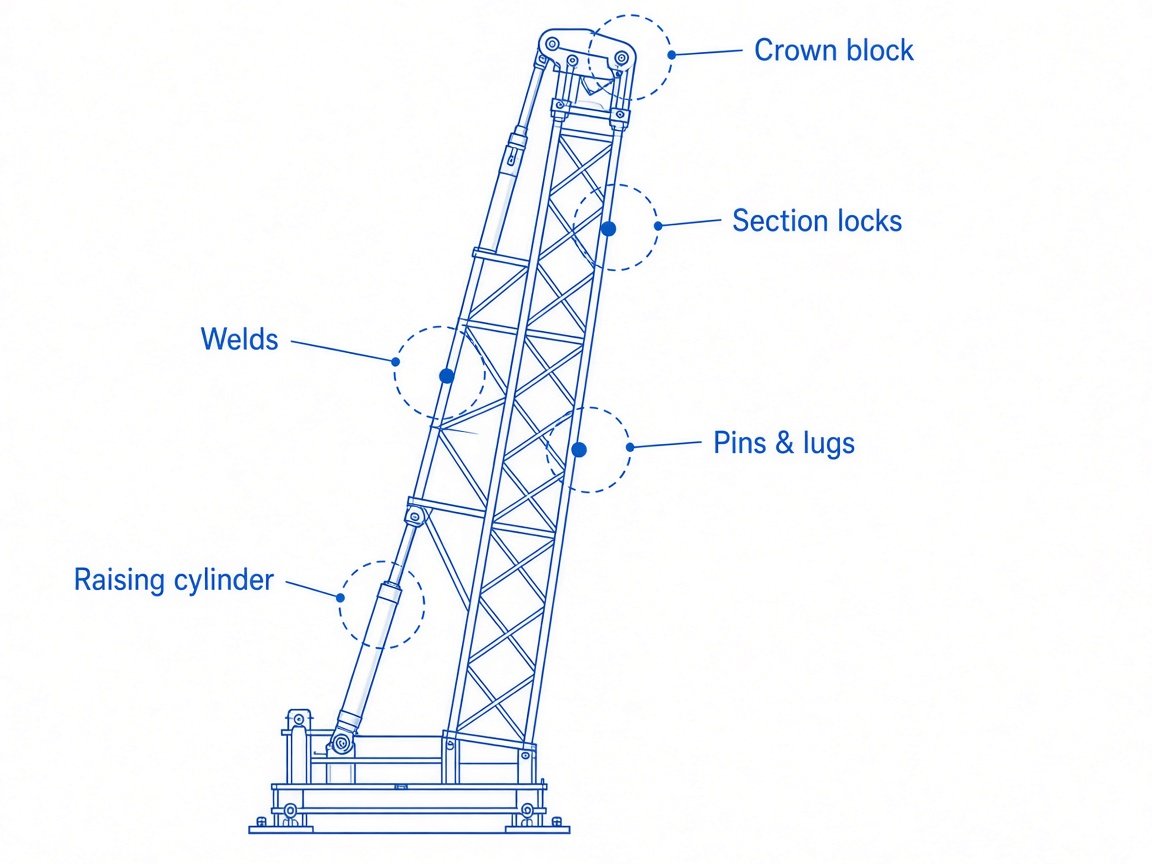
- Check for visible deformation, bent or replaced members, and weld repairs. Ask whether any repair was carried out to an approved procedure.
- Inspect pins, lugs, raising cylinders, telescoping sections and locking mechanisms.
- Ask for the most recent structural inspection report: its date, inspector, method (for example, the non-destructive testing methods used) and findings.
- Confirm the condition of the crown block, sheaves and any racking board or tubing board.
- Check that the mast nameplate is present and legible and that its data matches the documentation.
Ask the seller which standard or procedure the inspection followed — for example, whether the structural inspection followed API RP 4G or the OEM procedure. Then confirm that reference independently. Naming API RP 4G (Operation, Inspection, Maintenance, and Repair of Drilling and Well Servicing Structures, 5th Edition 2019 with Addenda) as a buyer discussion reference does not mean the offered rig was inspected to RP 4G, does not assign Category I–IV labels here, and does not claim Hubei Link or any XJ-series configuration is compliant. See the API digital catalog (checked 2026-11-03). A cited standard does not prove compliance unless the inspection report shows it. Keep non-destructive testing described as the “methods used” in the report rather than prescribing a technique list.
Step 3 — Inspect the drawworks, brakes and wire rope system
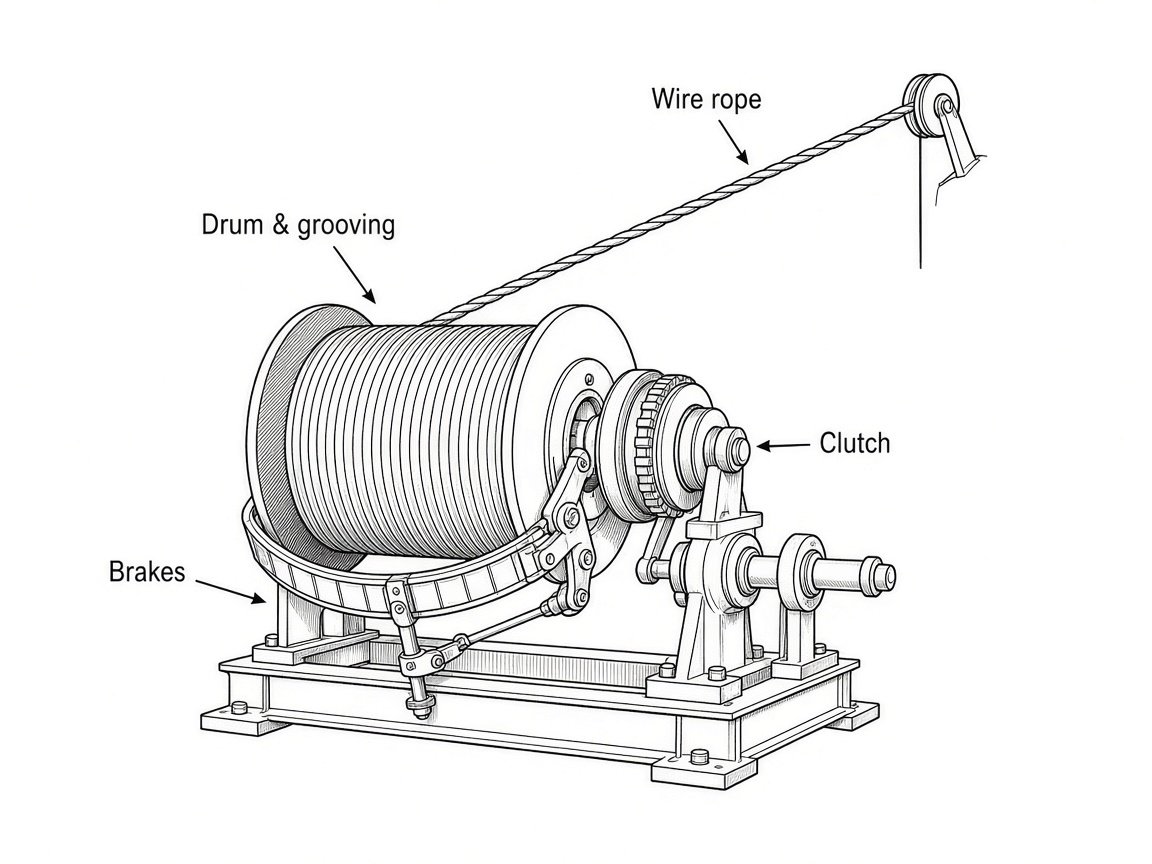
- Inspect the drum and its grooving, the clutches and the main and auxiliary braking systems.
- Review brake service records and the brake component replacement history.
- Check the condition of the wire rope, and its certificate if it was replaced. Confirm that the rope specification matches the rig documentation.
- Inspect the traveling block, hook and deadline anchor. Ask for inspection records for these load-path components.
- Confirm that the safety devices fitted to the rig are present and functional. Where fitted, ask specifically about crown saver / anti-two-block (crown protection) and drawworks or weight-indicator overload protection. Do not assume any model family (including XJ-series) carries these devices as standard; confirm against the actual unit and its documentation.
Step 4 — Inspect the power train: engine, transmission and drives
- Record the engine make, model and serial number, along with its hour meter reading where available, and check these against the service records. Hour meters can be replaced, so cross-check them with maintenance history.
- Ask for oil analysis, overhaul records and emissions-related documentation where required in the destination country.
- Inspect the transmission, torque converter (if fitted), drivelines, chain cases and right-angle drives for leaks, noise and records of past repairs.
- Check that cooling systems and air intake are suitable for the operating climate.
- Confirm the availability of spare parts for the installed engine and transmission models.
Step 5 — Inspect the carrier, axles and road-going systems
- Inspect the chassis frame for cracks, weld repairs and corrosion.
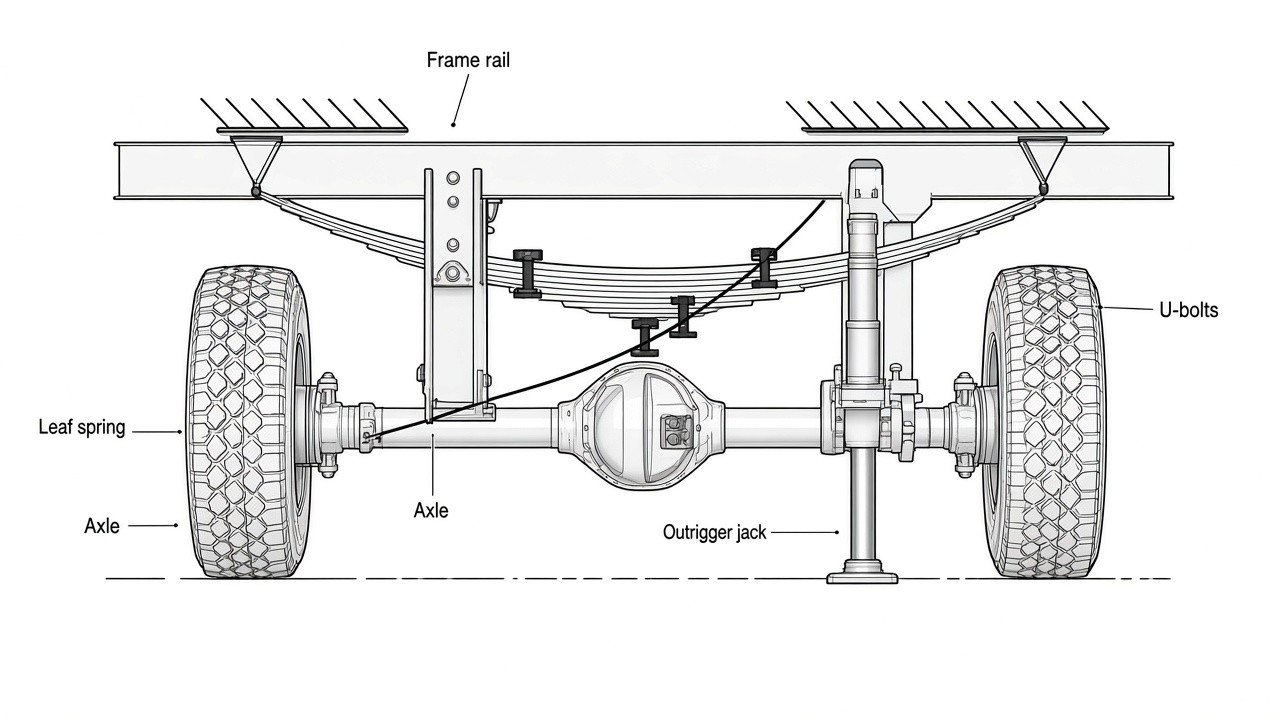
- Check axles, suspension, steering, tires and the braking system for road travel.
- Confirm the carrier configuration and whether the rig can be registered or transported legally in the destination country. Road rules vary by country and need local confirmation.
- Inspect the outriggers or leveling jacks and their hydraulic circuits.
Step 6 — Check hydraulic, pneumatic, electrical and safety systems
- Look for hydraulic leaks, damaged hoses and contaminated fluid, and confirm cylinder function.
- Check air system components and controls.
- Inspect electrical wiring, lighting, and any area-classification requirements for the intended site (confirm these against the buyer’s site rules and the applicable local regulations).
- Confirm the condition and any documented certification status of the rig floor tools, tongs, slips and elevators supplied with the rig.
- Check that emergency stops, guards, escape equipment and fire protection work as intended.
Step 7 — Review refurbishment records and quality documents
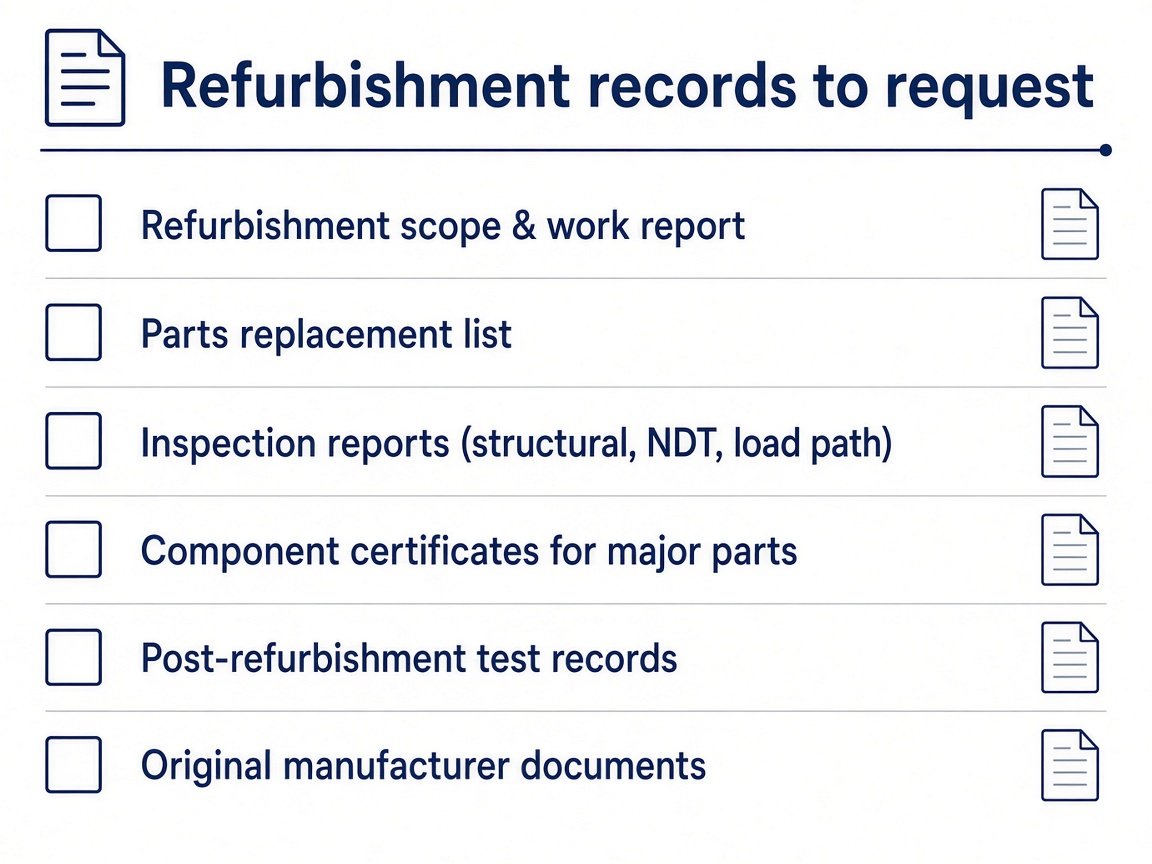
Records are what turn a refurbishment claim into evidence. Request:
- a written refurbishment scope and work report, including a parts replacement list;
- inspection reports (structural, NDT, load-path components) with dates and inspector identification;
- material or component certificates for major replaced parts;
- test records from after refurbishment;
- the original manufacturer documents: manuals, specification sheet and drawings, where available;
- an ownership and operating history, if available.
Treat any certification claimed for the rig or the seller as unconfirmed until the certificate itself is reviewed and confirmed with the issuing body.
For how documentation and other line items should appear in a commercial offer, see the workover rig quotation checklist.
Before any price discussion, ask which of these documents actually exist for the specific unit under consideration.
Reviewing a specific used or refurbished unit? See the used and refurbished workover equipment hub, or contact the Hubei Link team to ask whether refurbishment records and a test-run plan can be provided for a specific unit. Availability is confirmed per inquiry.
Step 8 — Witness a test run before acceptance
Agree on a written test procedure before the test takes place. A typical functional test run may cover the following, adjusted to the equipment actually fitted:
- engine start-up, idle and loaded operation, and monitoring of gauges and alarms;
- mast raising, telescoping, locking and lowering;
- drawworks hoisting and lowering, and operation of the main and auxiliary brakes;
- hydraulic and pneumatic functions, including outriggers and auxiliary systems;
- safety device function checks (including, where crown protection is fitted, traveling-block travel / crown-clearance checks, and spot-checks of emergency stops);
- a carrier road-drive check, where it is practical.
Any load test, its load value and its acceptance criteria must be defined from the manufacturer’s documentation or the applicable standard or the agreed written procedure. They are not set in this article. Record the test with signed reports and photos or video. Use third-party witnessing where the contract requires it.
Step 9 — Define warranty, spares and after-sales terms in writing
- State the warranty scope (which components it covers), its duration, its start trigger, and its exclusions.
- Define how defects are reported, the response time and the remedy.
- Include a recommended spare parts list and confirm its availability.
- Specify operator training and commissioning support, if required.
- List all documents to be handed over at delivery.
No warranty term or service life should be assumed. Each one must appear in the signed contract.
Buyer decision table: used and refurbished workover rig inspection
| Buyer question | What to check | Evidence to request | Gap if missing |
|---|---|---|---|
| Does the rig still fit my wells? | Depth rating with tubular size; hook load and mast capacity with conditions | Original spec sheet, nameplate photos | Capacity unconfirmed |
| Is the mast structurally sound? | Deformation, weld repairs, pins, raising system | Dated structural/NDT inspection report | Primary structural risk open |
| Are hoisting and braking reliable? | Drawworks, brakes, wire rope, block and hook | Brake service records, rope certificate, component inspection | Load-path risk open |
| What condition is the power train in? | Engine hours vs records, transmission, drives | Service history, overhaul records, oil analysis | Hidden overhaul cost |
| Can the carrier be moved and registered? | Frame, axles, brakes, configuration | Chassis documents, local transport check | Delivery/registration risk |
| What was actually refurbished? | Scope vs physical condition | Work report, parts list, component certificates | “Refurbished” is unconfirmed |
| Does it work as a system? | Witnessed functional test | Signed test procedure and report | Acceptance not demonstrated |
| Who supports it after delivery? | Warranty, spares, training | Contract clauses, spares list | Post-delivery risk with buyer |
Red flags that justify pausing a purchase
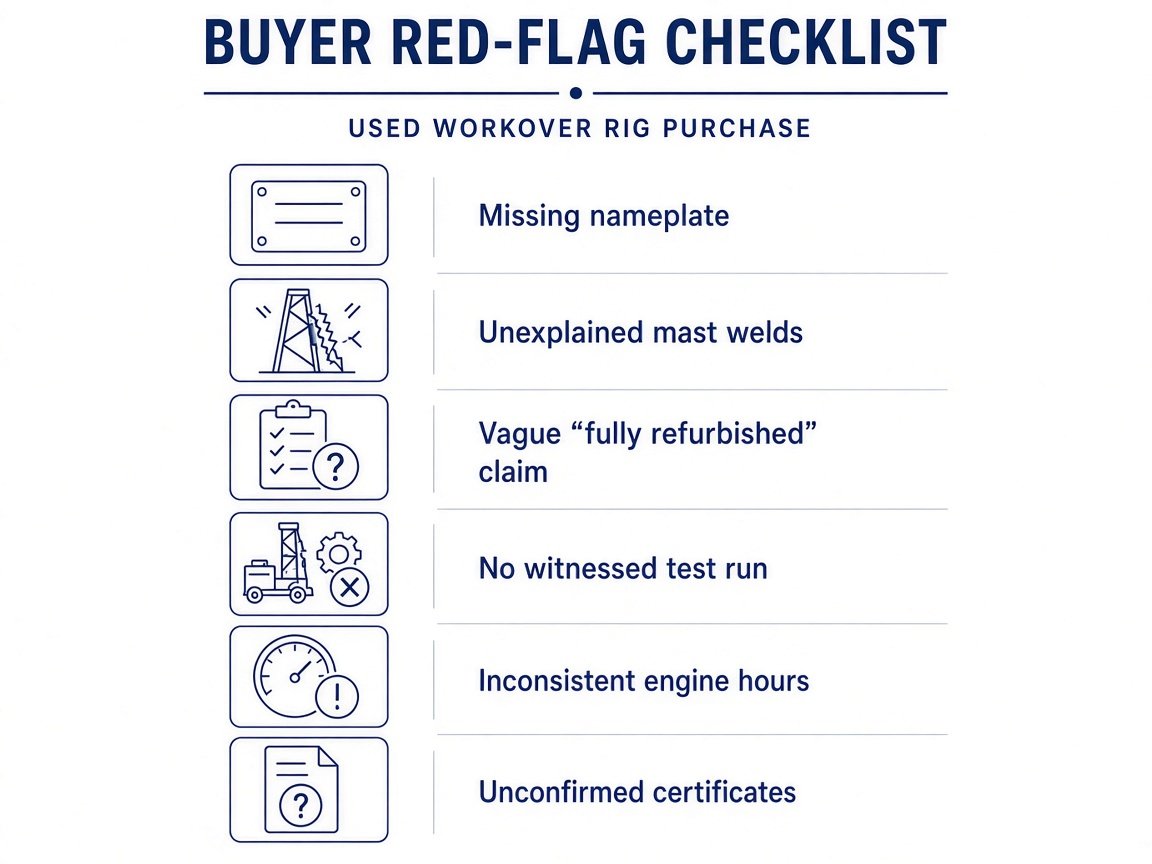
- No nameplate, or nameplate data that does not match the documents.
- Unexplained weld repairs on the mast or substructure.
- A refurbishment described only as “fully refurbished”, with no written scope.
- The seller declines a witnessed test run or third-party inspection.
- Engine hours or records that are inconsistent with the rig’s visible wear.
- Certificates that cannot be confirmed with the issuing body.
How this checklist differs from a coiled tubing unit acceptance checklist
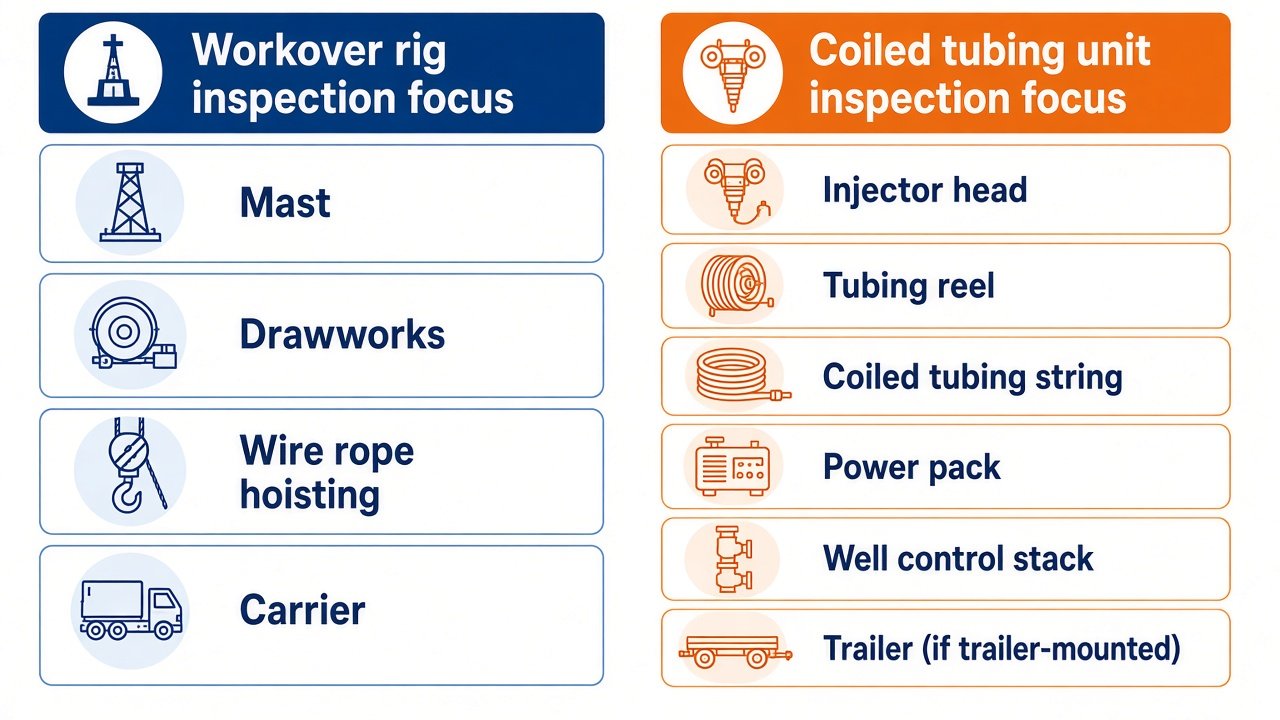
A workover rig and a coiled tubing unit are different equipment classes. A workover rig inspection focuses on the mast, drawworks, wire rope hoisting system and carrier. A coiled tubing unit inspection focuses on the injector head, tubing reel, coiled tubing string, power pack and well control stack, and on the trailer where the unit is trailer-mounted. Buyers of refurbished trailer-mounted coiled tubing equipment should use the refurbished coiled tubing trailer acceptance checklist.
FAQ
What is the most important document when buying a used workover rig?
No single document is enough. The original specification and nameplate data confirm what the rig was designed to do. A recent dated structural inspection report for the mast is often the most critical record of its current condition, and refurbishment and test records show what has changed since manufacture.
Is a refurbished workover rig the same as a new one?
No. A refurbished rig has had defined work done on it, but its unreplaced components still carry their previous service history. Its condition depends on the documented scope, the inspections and the testing. The buyer should compare these records against the warranty offered.
Should a third-party inspection be used?
A third-party inspection gives an independent record of the rig’s condition and of the test run. It is especially useful for cross-border purchases. The inspection scope and reference standard should be agreed in writing before the inspection takes place.
Can the rig’s rated depth and hook load be trusted from the model name?
No. Ratings should be taken from the original documentation, together with their stated conditions (for example, the tubular size for depth ratings). Depth and hook load answer different questions; load depends on the string and well conditions (see the SLB hook-load definition, checked 2026-11-03). Any structural repair or modification may affect ratings, and that should be addressed by the inspection. An original brochure states design values for a configuration; it does not by itself prove the current condition of a used unit.
What should a test run include?
As a general framework, it should include engine operation, mast raising and lowering, drawworks hoisting and braking, hydraulic functions and safety devices. Any load test must use values and acceptance criteria from the manufacturer’s documents or the applicable standard.
Next step: request inspection documents for a specific rig
When a used or refurbished workover rig is under consideration, agree what documentation and inspection steps will apply to that specific unit before discussing price. Discuss candidate used or refurbished workover units through the used and refurbished workover equipment hub; availability is confirmed per inquiry and is not a standing inventory guarantee. Contact the Hubei Link team to ask whether a specification sheet, refurbishment records and a witnessed test-run plan can be provided for a specific unit under discussion.