
The XJ650 workover rig specifications published by Hubei Link Petroleum Equipment describe a truck-mounted workover and well servicing rig. The website lists a nominal servicing depth of 8,500 m with 2-7/8 in EUE tubing, a 1,575 kN maximum static load, 700 hp of listed power and a 35 m mast on a dedicated six-axle 12×8 chassis. Suitability for a specific well depends on the confirmed well program and string design.
This guide is for procurement managers, tender engineers and rig superintendents. It explains what each published figure means, which condition travels with it, how to judge fit against your own job, and what to request in a project-specific proposal. For the product listing and inquiry form, see the XJ650 workover rig product page.
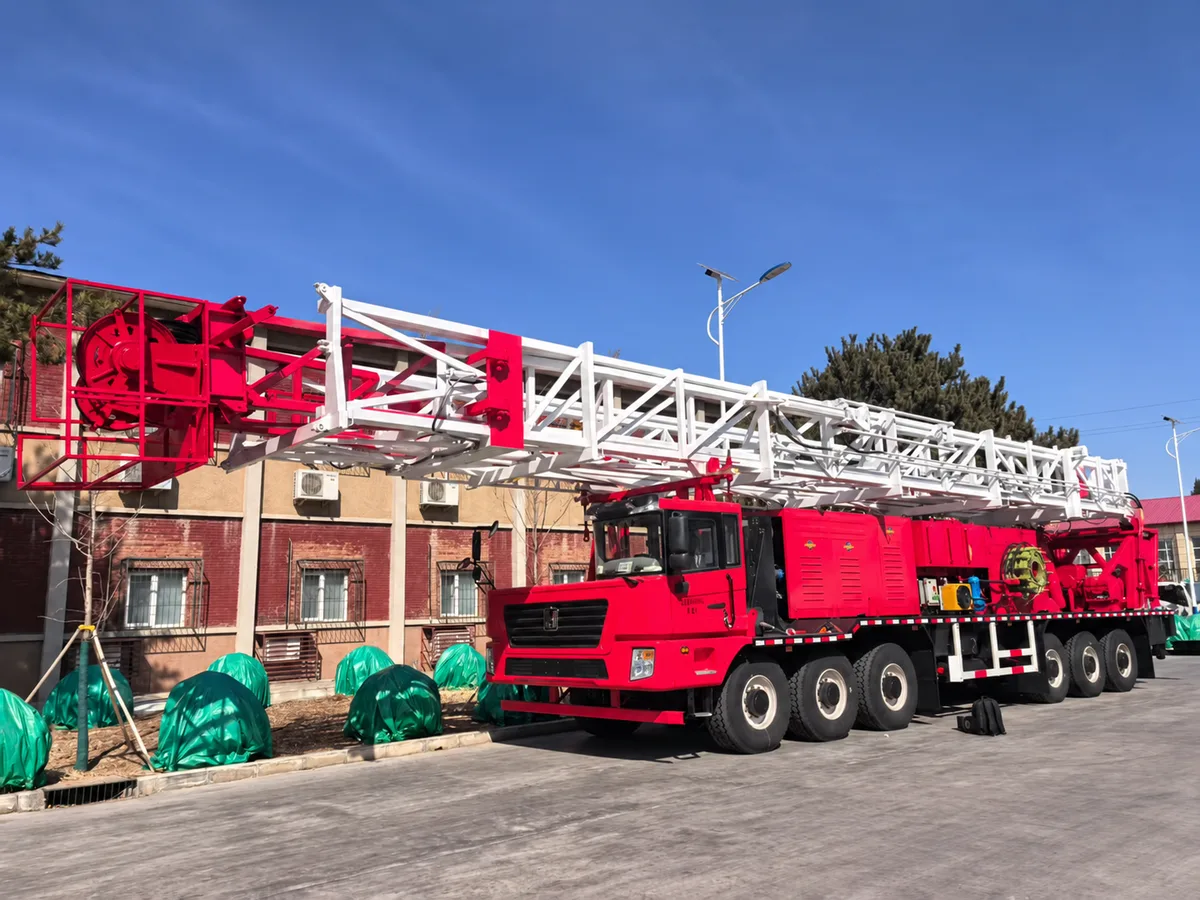
What are the core XJ650 workover rig specifications?
| Item | Published value | Basis / condition |
|---|---|---|
| Nominal servicing depth | 8,500 m with 2-7/8 in EUE tubing | Nominal; subject to well program and string design |
| Maximum static load | 1,575 kN | Static structural rating; not a working hook load |
| Listed power | 700 hp | Listed as installed/engine power; exact engine package confirmed per project |
| Mast height | 35 m | Product page |
| Chassis | Dedicated six-axle 12×8 | Published configuration |
Read the table as a set of documented ratings, each with its own basis. None of the rows by itself says whether the rig suits a particular well; that judgement needs your well program, tubular schedule and site conditions. Other load, depth and chassis figures should be requested for the exact configuration quoted.
How do you match the XJ650 to an application and duty?
Selection starts from the job, not from the headline numbers. Before comparing rigs, define:
- Job type: completion, recompletion, tubing or rod replacement, well maintenance, fishing or plug-and-abandon work.
- String design: tubular type (EUE tubing or drill pipe), size, weight and grade, and the deepest string you expect to run or pull.
- Expected loads: string weight in the fluid you will use, plus allowances for drag, stuck-pipe pulls and fishing jars, as calculated by your well engineer.
- Mobility pattern: how often the rig moves, over what roads, and how much rig-up space each wellsite offers.
- Environment and rules: climate, emissions requirements and local transport regulations.
Once these are written down, each XJ650 specification becomes a check against a requirement rather than a sales figure. A tubing job that sits well inside the published servicing-depth basis, with loads inside the confirmed ratings and routes the chassis can travel, is a candidate for a detailed proposal; a job near any boundary needs the supplier’s project-specific load and configuration data first.
Buyer decision table
| Buyer question | What to check | Evidence to request |
|---|---|---|
| Does the depth basis match my string? | Your tubular type and size against 8,500 m with 2-7/8 in EUE tubing | String design calculation; supplier’s statement for your tubular |
| Is there enough hoisting capacity? | Your calculated peak load against the confirmed hook load ratings | Rated and maximum hook load, load chart for the quoted configuration |
| Which power package is quoted? | What the 700 hp figure refers to, and the matching transmission | Powertrain datasheet for the exact assembled package |
| Can the rig reach the wellsite? | Route, axle loads, permits, turning space | Transport mass and axle-load statement for the quoted configuration |
| Does the mast suit my stands? | Stand length and racking needs against the 35 m mast | Racking capacity with its tubular basis |
What does the 8,500 m with 2-7/8 in EUE tubing depth figure mean for a buyer?
The website lists the XJ650 nominal servicing depth as 8,500 m with 2-7/8 in EUE tubing. It is a nominal rating stated against that specific tubing, not an unconditional depth limit and not a drilling figure. Suitability depends on the confirmed well program and string design.
How to read an EUE tubing depth basis versus a drill-pipe depth basis
A depth rating is really a statement about string weight: how long a string of a specified tubular the rig can handle under the supplier’s stated conditions. EUE tubing and drill pipe differ in weight per length and in connection type, so the same rig shows a different figure for each. That is why a figure stated with EUE tubing cannot be compared directly with a figure stated with drill pipe, including the XJ750 drill-pipe depth basis. These headline figures are not a like-for-like capacity ranking.
To use the XJ650 figure for your project:
- Identify the tubular you will actually run, including size, weight and grade.
- Ask your well engineer to calculate the string load for your deepest planned run, in the fluid you will use.
- Compare that load with the rig’s confirmed load ratings, not just with the depth number.
- If you plan to run drill pipe, ask the supplier to state the drill-pipe basis for your string in the proposal.
A detailed walk-through of the tubing rating is in XJ650 workover depth and the EUE tubing rating.
How should the XJ650 load ratings be read?
The website lists a maximum static load of 1,575 kN as a separate parameter. A static rating describes the structure under a static load; it is not the load you hoist with during routine work. Request the rated hook load, maximum hook load and load chart for the quoted configuration and line arrangement in the project-specific technical proposal.
Maximum load versus safety margin
A maximum rating is a ceiling under the supplier’s stated conditions. In practice, engineers plan the job against a working load, keep a margin between that working load and the rig’s ratings, and treat stuck-pipe pulls and jarring as separate load cases that must also stay inside the ratings.
How much margin is appropriate is a project decision. It depends on your company’s standards, the condition of the string, the well’s risk of sticking and the operator’s procedures. This article does not suggest a margin value, and none should be inferred from a maximum figure alone.
Three ratings are often confused:
- Maximum hook load: the hoisting ceiling of the hook and travelling system; confirm it for the quoted configuration.
- Rated hook load: the load stated for normal operation with a defined line arrangement; confirm it per project.
- Maximum static load: the structural rating listed on the product page, here 1,575 kN.
More background is in Workover rig hook load explained.
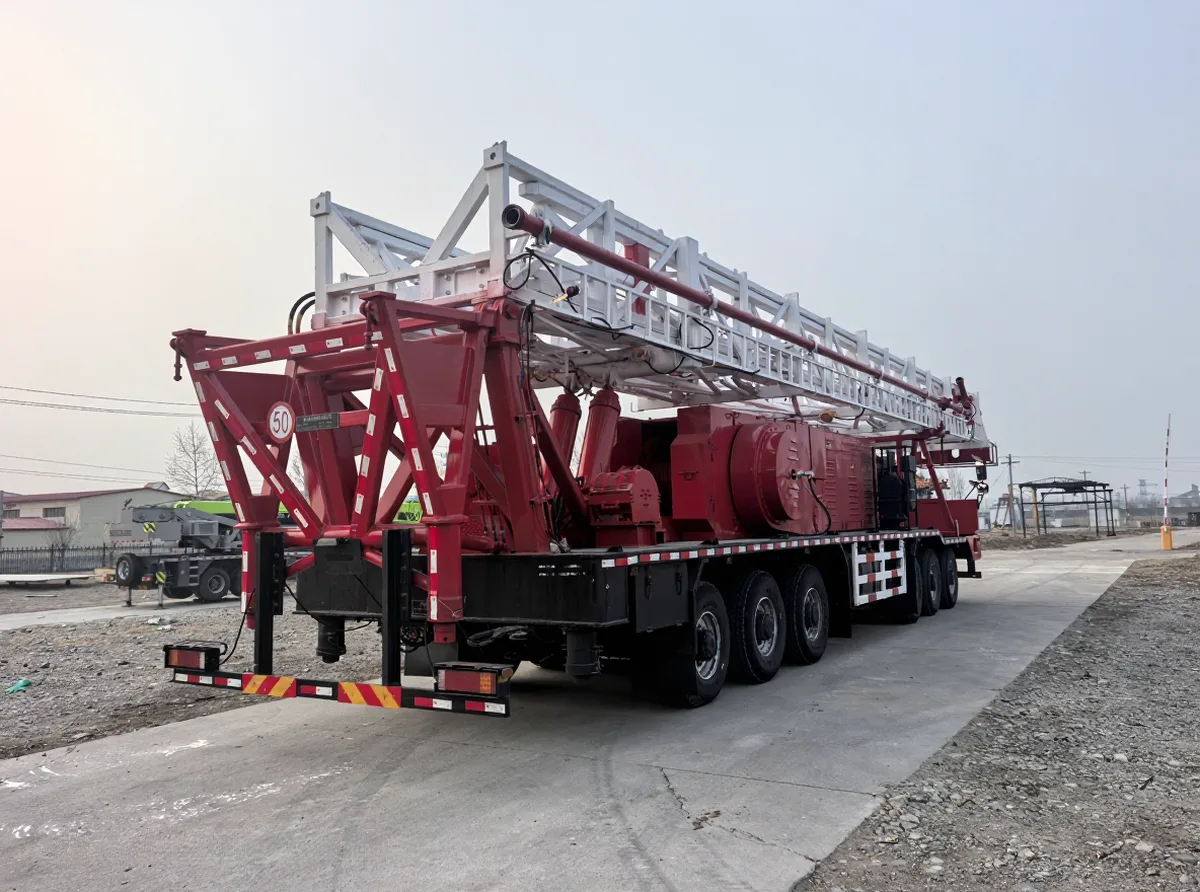
What does the XJ650 powertrain consist of?
The product page lists 700 hp as installed and engine power, with domestic or imported power-system options. Whether this figure describes one engine or the total installed power, and which engine and transmission pairing applies, requires engineering confirmation for the offered configuration. It is not a drawworks rating.
For buyers, the useful questions are practical: which engine package will be delivered, whether it meets the emission rules where the rig will work, which transmission is paired with it, and how parts and service support for that engine family will be handled in the operating country. A listed option is not a statement of availability for a given order.
How does the six-axle 12×8 chassis affect mobility?
The published XJ650 configuration uses a dedicated six-axle 12×8 chassis. Confirm assembled transport mass, axle loads, turning dimensions, ground clearance, route limits and permits for the selected configuration.
A drive configuration tells you how many wheel positions are driven, which affects traction on soft lease roads and grades. It does not by itself tell you whether the rig is legal on a given road or how it will handle a particular route; those depend on mass, axle-load distribution, tires and local rules.
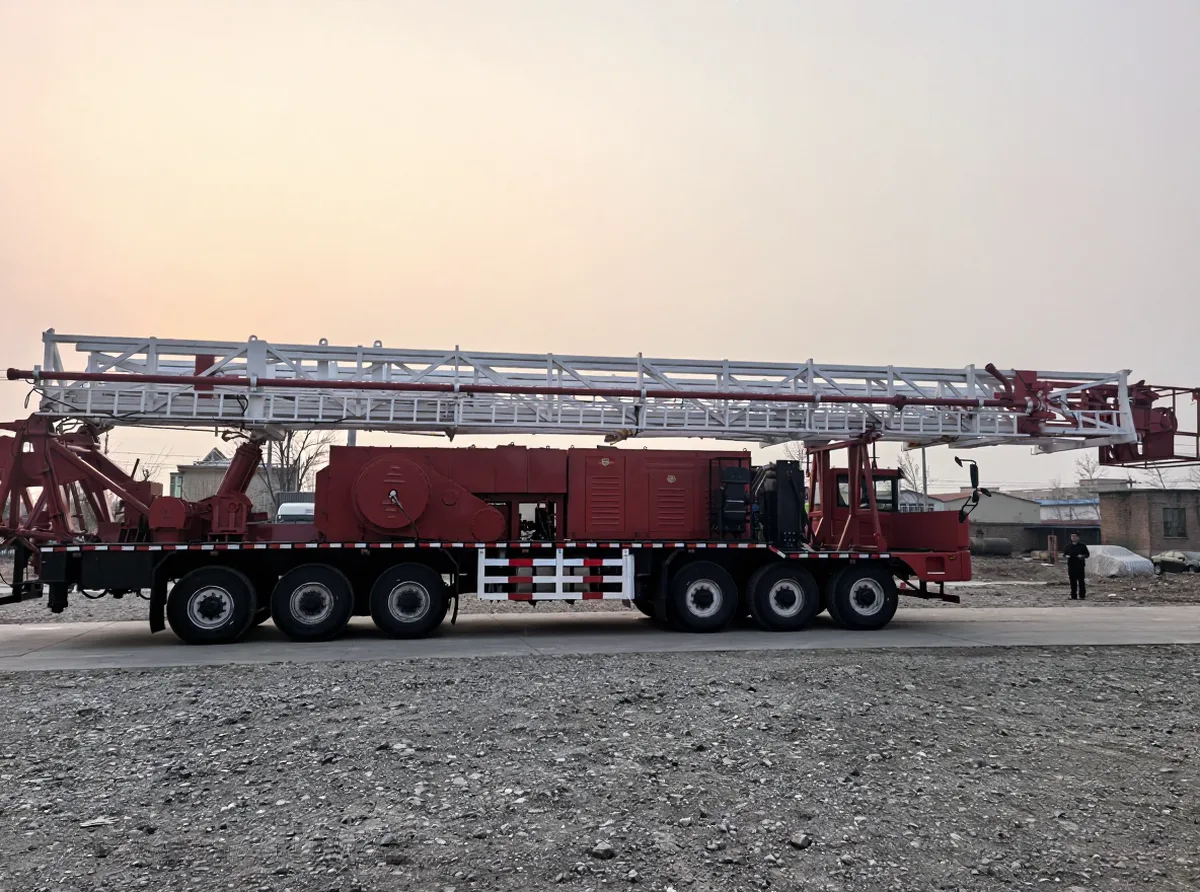
How should transport and wellsite layout be planned?
On site, the 35 m mast sets the overhead clearance you need when raised and the lay-down length you need for rig-up. Plan the pad so the chassis can be positioned, the mast raised without obstruction, and pipe handled safely. For how mast height relates to stand length and racking, see Workover rig mast height and racking capacity.
Transport and wellsite checklist:
- Assembled transport mass and overall dimensions for the exact configuration quoted
- Axle-load distribution against local road limits
- Bridge, culvert, overhead-line and turning constraints on the actual route
- Permit and escort requirements in the operating country
- Pad size, ground bearing and access for the chassis at the wellsite
- Overhead clearance and lay-down space for mast rig-up
- Space for pipe racks, ancillary equipment and safe working zones
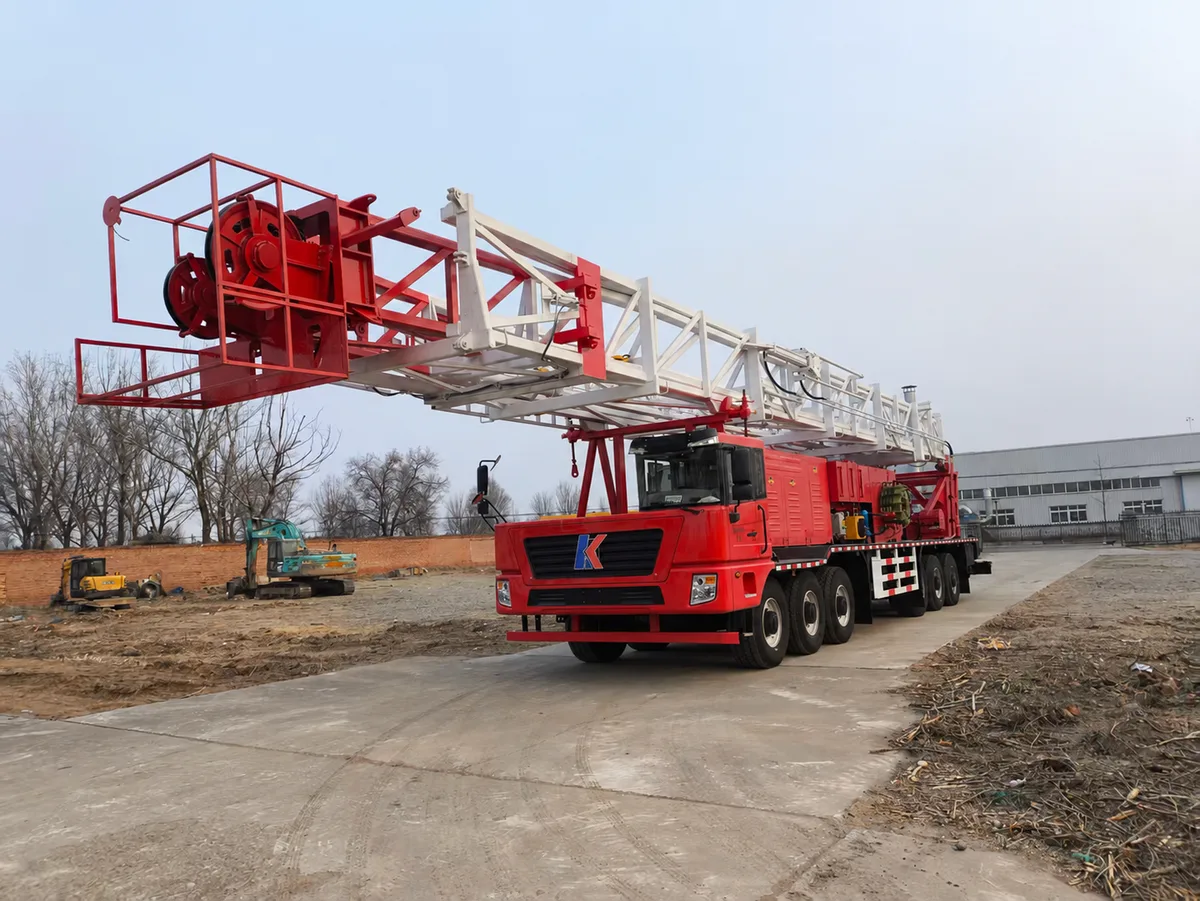
Which documents and procurement questions belong in the enquiry?
No certification is implied by this article. For a procurement file, request:
- General arrangement drawings for the quoted configuration
- Load charts with defined rated, maximum and static loads
- Mast inspection and test records
- Powertrain datasheet for the exact engine and transmission package
- Axle-load, transport-mass and dimension statement
Procurement question checklist
- What depth or load basis applies to our tubular, not only to 2-7/8 in EUE tubing?
- What are the rated hook load, maximum hook load and racking capacity for the quoted configuration?
- What does the 700 hp figure refer to, which engine and transmission are quoted, and do they meet our emission rules?
- What is the assembled transport mass, axle-load distribution and overall size?
- Which options change turning dimensions, ground clearance or mass?
- What documents, spare parts and service support are included in the scope of supply?
- Is the rig quoted new, refurbished or used, and what inspection records come with it?
The workover rig quotation checklist lists further items to include in an enquiry.
When should you look at the XJ550 or XJ750 instead?
If your well program and string design sit comfortably within a lighter rig’s published basis, review the XJ550 workover rig. If you need more hoisting capacity than the XJ650 offers for your string, review the XJ750 workover rig. Each model’s figures carry their own tubular basis, so compare them against your string design rather than ranking models by metres. The workover rig series overview and how to select a truck-mounted workover rig give the wider selection context.
FAQ
What is the XJ650 servicing depth?
The website lists the XJ650 nominal servicing depth as 8,500 m with 2-7/8 in EUE tubing. Treat it as a nominal rating stated against that specific tubing, not as a universal depth limit. If you will run a different tubular, such as drill pipe or heavier tubing, the equivalent depth will differ, because string weight changes with tubular size, weight and grade. To judge fit, have your well engineer calculate the string load for your deepest planned run in the fluid you will use, and compare it with the rig’s confirmed load ratings. Then ask the supplier to state, in the project proposal, the depth or load basis that applies to your tubular.
What load ratings does the XJ650 publish?
The product page lists a maximum static load of 1,575 kN. This is a structural rating under static load, not a working hook load, so it should not be used on its own to plan hoisting. Plan the job against a working load with a margin set by your own engineering standards, and check that stuck-pipe pulls and jarring also stay inside the rig’s ratings. Request the rated hook load, maximum hook load and load chart for the quoted configuration and line arrangement. Comparing your calculated peak load with those confirmed figures is the reliable way to judge hoisting fit.
What power does the XJ650 have?
The product page lists 700 hp as installed and engine power, with domestic or imported power-system options. Whether the figure refers to a single engine or total installed power, and which engine and transmission pairing applies, is confirmed by engineering for each project. When comparing quotations, ask for the powertrain datasheet of the exact assembled package, confirm it meets the emission rules in your operating country, and check how parts and service for that engine family will be supported locally. A listed option is not a promise of availability, and the power figure should not be read as a drawworks rating.
How tall is the XJ650 mast?
The published mast height is 35 m. For the wellsite, this tells you the overhead clearance needed with the mast raised and the lay-down length needed for rig-up, so check pad size, overhead lines and access before mobilising. Mast height alone does not tell you racking capacity, stand length or structural rating. Those depend on the mast design, so request the mast load rating, racking capacity with its tubular basis, and the mast inspection and test records for the quoted configuration. Engineers should confirm that the planned stand length and pipe handling method suit the mast before the rig is selected.
What chassis is the XJ650 built on?
The published configuration uses a dedicated six-axle 12×8 chassis. The drive configuration indicates how many wheel positions are driven, which matters for traction on soft lease roads, but it does not prove that the rig can legally travel on a given road. Before planning a move, request the assembled transport mass, axle-load distribution, overall dimensions, turning dimensions and ground clearance for the exact configuration quoted, because tires and options can change them. Then confirm route limits, permits and escort requirements with the local authorities in the operating country, and check wellsite access for the chassis.
Request an XJ650 configuration review
Send well depth, tubing or drill-pipe size, operating country, expected hook load if available, terrain/road conditions and new/refurbished/used preference. Emissions and chassis requirements can be added for configuration review.