
Workover rig hook load is the downward force acting at the hook during a job. Rated hook load is a documented equipment capability under specified conditions. To select a rig, compare the project’s assessed loads with the limits of the offered configuration, including the mast, hoisting equipment and accessories. Well depth or a headline capacity alone is insufficient. The SLB hook-load definition supports the force terminology; the selection approach below is a procurement framework.
This guide is for buyers comparing conventional mast-and-drawworks workover rigs. It explains the ratings, shows how to compare quotations and lists the documents needed for a technical enquiry. Actual allowable operating loads require the applicable equipment documentation and a project-specific engineering review.
What does hook load mean on a workover rig?
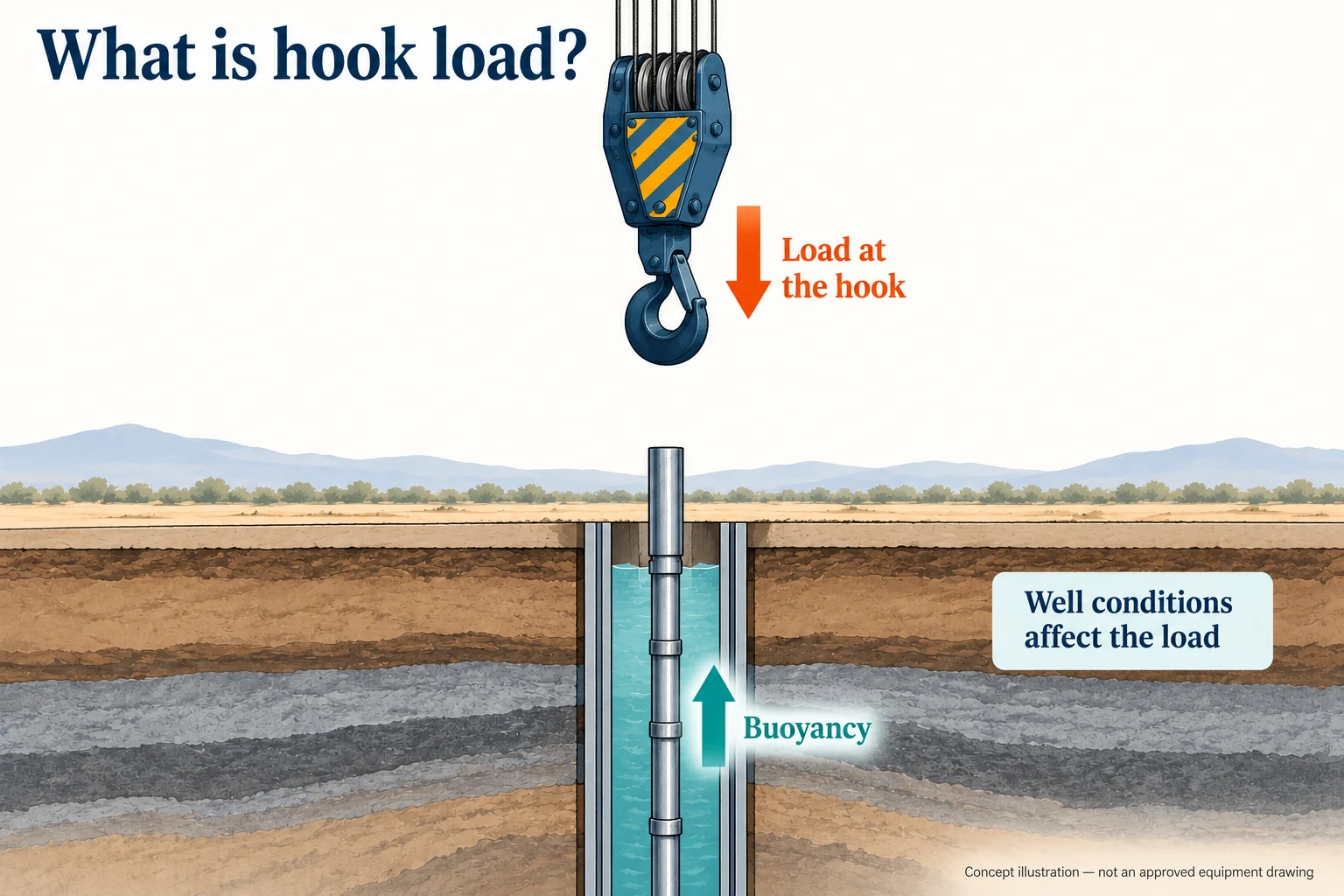
Hook load is the force acting downward at the hook. The actual load depends on the suspended assembly and well conditions. SLB’s definition identifies buoyancy and wellbore friction among the factors affecting that force. See the SLB hook-load definition.
For a buyer, the first distinction is between an actual load and a documented equipment rating. An operating load describes a condition during a job; a rating describes a stated equipment capability under specified conditions. A procurement comparison should identify both, with their respective bases.
For a load indicator, ask the supplier to explain its measurement arrangement, calibration and zero or tare convention. Confirm which equipment weights are included and whether the indication represents hook load or another inferred load. Record that basis alongside the quoted rating so the engineering team can compare like with like.
Are rated hook load, mast capacity and line pull the same?
These terms refer to different parts or aspects of the lifting system. Treat them as separate entries in a bid evaluation until their definitions and conditions have been established. A shared numerical value does not establish that two ratings are interchangeable.
| Parameter | What the buyer should identify | Units to clarify | Documentation to request |
|---|---|---|---|
| Rated hook load | The stated load at the hook and its rating basis | Force units such as kN or lbf; clarify any tonne-based notation | Rig specification, definitions and applicable performance information |
| Mast capacity | The structural rating and the load combination to which it applies | Force units and any simultaneous load conditions | Mast documentation, applicable load chart and setup requirements |
| Fast-line pull | The pull in the fast-line end of the drilling line at the drawworks, under stated conditions | Force units; clarify the specified drum layer and operating condition | Drawworks data and performance curves |
| Maximum static load | The component or system being rated and the meaning of static | Preserve the manufacturer’s exact units and qualifiers | Manufacturer’s definition and restrictions |
| Nominal workover depth | The tubular basis and operation associated with a depth entry | Length units plus tubular size and specification | Depth-rating basis and applicable configuration |
These are comparison fields, not universal definitions of every manufacturer’s terminology. If a quotation uses “maximum load” without identifying the component or condition, request clarification rather than placing it in the rated-hook-load column.
Check the units before comparing figures. A tonne (t) is a unit of mass; kN and lbf are force units. If a load is quoted in “tons,” ask which ton convention and force or mass basis the supplier intends. Do not silently relabel a mass value as force. NIST lists mass and force separately in its SI conversion guide. This article does not convert any manufacturer’s rating.
The fast line is the end of the drilling line attached to the drawworks drum, as defined in the Drilling Matters glossary. Fast-line pull is not the load at the hook. The applicable reeving arrangement and manufacturer performance data are needed to relate them; multiplying line pull by a line count alone does not establish an approved hook-load rating.
For an OEM example of why conditions matter, NOV’s drawworks technical sheet lists fast-line pull separately from maximum hook load and distinguishes hook-load configurations by the number of lines. Its offshore equipment values are not ratings for the workover rigs discussed on this website.

Why is workover depth alone insufficient for selection?
A depth entry leaves important job requirements unspecified. A useful enquiry also describes the tubular schedule, well trajectory, attached equipment and planned operations. Those inputs allow an engineer to develop relevant load cases and compare them with documented limits.
Consider two enquiries specifying the same well depth. One provides the tubing size, weight per unit length, bottomhole assembly and planned retrieval work. The other gives only depth. The second enquiry still needs substantial clarification before a meaningful capacity comparison can begin.
For an initial enquiry, provide a tubular schedule showing each section’s size, length, unit weight, connection and material grade where relevant. Identify tools and other suspended equipment separately. Include the available well schematic and fluid information. Ask the responsible engineer to identify any additional inputs required by the proposed operation.
When reading a model-specific depth article, keep its tubular conditions attached to its figures. The XJ550 specification guide and XJ650 depth-rating guide illustrate how model information is presented with its stated conditions. A depth rating for one tubular specification does not establish suitability for every string at that depth.
What should buyers check across the hoisting system?
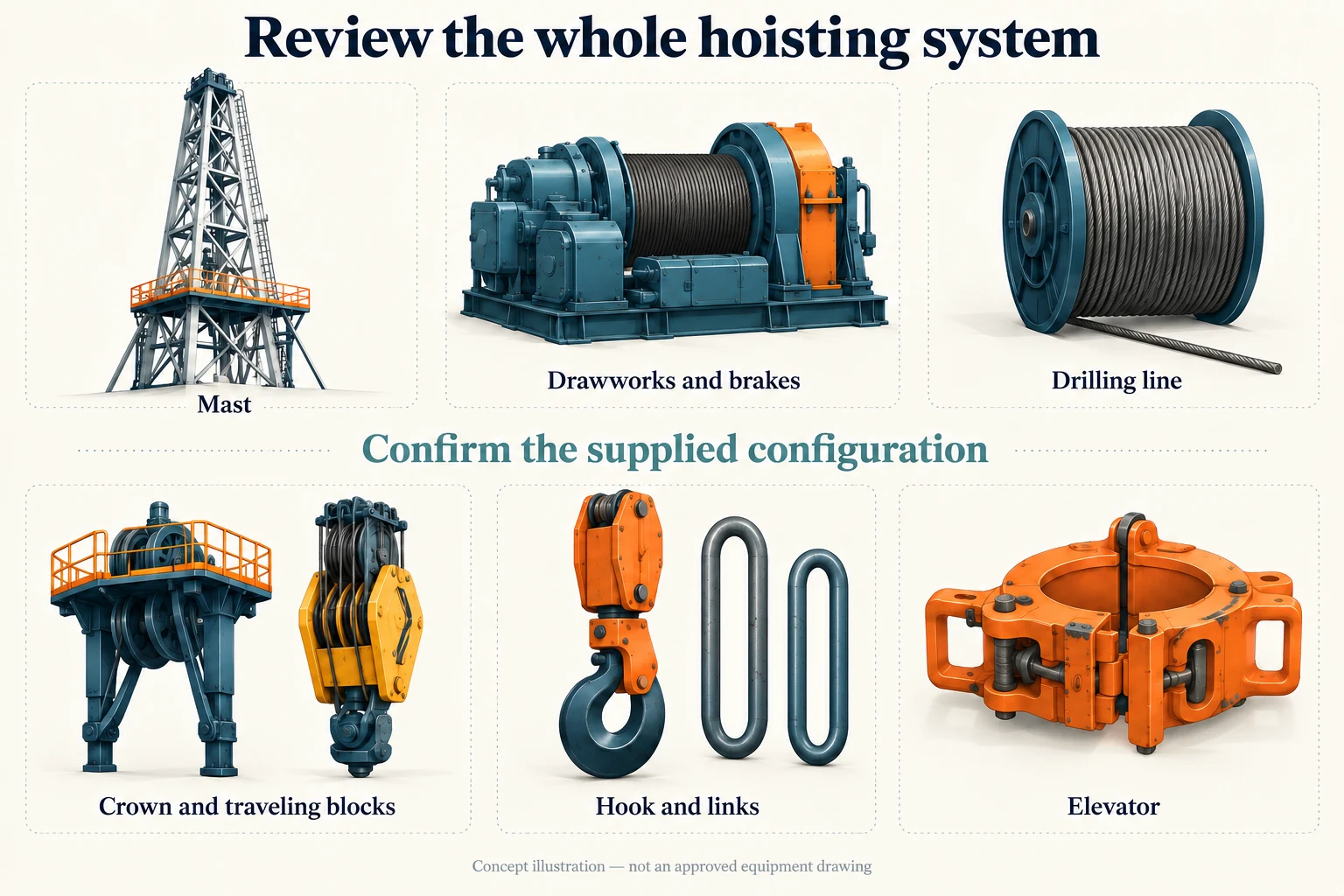
Request a configuration-specific review covering the structure, drawworks, line, blocks and load-carrying accessories. SLB describes the traveling block as the moving sheave assembly in the pulley system, and the drawworks as the machinery that reels the drilling line in and out. These descriptions explain their roles; they do not establish a supplied rig’s capacity.
Use the following questions to organize the supplier’s response:
- Mast and setup: Which mast configuration, support arrangement and applicable load chart accompany the offer? What wind, setback and other simultaneous conditions must be considered?
- Drawworks and brakes: Which performance information applies to the proposed load, speed, gear and drum condition? What documentation covers holding and lowering duties?
- Line and blocks: What line specification, reeving arrangement and component identities form the quoted configuration? Can the supplier provide the corresponding drawings and records?
- Hook, links and elevator: Which items are included, what are their documented ratings, and how is compatibility with the proposed tubulars established?
- Power and environment: Which engine or motor, transmission and cooling configuration is offered? What ambient limits and restrictions apply?
Every applicable component and system limit must be respected. The evaluation should reconcile the assembled configuration and its load cases, including relevant structural, hoisting and braking restrictions. Comparing the lowest numbers from unrelated component data sheets is insufficient because those numbers may describe different loads and conditions. Request the manufacturer’s applicable system limits and an engineering assessment for the proposed job.
How do you compare hook-load ratings in five steps?
Use the same evaluation sequence for every quotation. Keep unanswered questions visible instead of filling them with assumptions.
- Step 1 — Define the job. Identify the intervention objective and supply the well schematic and tubular schedule. Separate confirmed inputs from estimates.
- Step 2 — Establish the load cases. Have the responsible engineer identify the loads and operating conditions to evaluate. Request the calculation basis and applicable design criteria; this guide supplies no universal safety factor.
- Step 3 — Match the configuration. Tie each quoted rating to the actual mast, drawworks, reeving, blocks and handling accessories. Record units, qualifiers and document revisions.
- Step 4 — Check operating and site constraints. Review the required lifting performance, environment, setup, working clearances and transport conditions with the supplier.
- Step 5 — Close the evidence gaps. Obtain a written technical response and an agreed supply list. Compare price and delivery against the same configuration reviewed by the engineering team.
Also identify mobility constraints. Ask the supplier to address transport dimensions, axle loads, road restrictions and the proposed carrier configuration in a separate logistics response. A hook-load figure does not answer transport questions.
For commercial comparison, request a clearly bounded supply list. Identify which accessories, documentation, commissioning activities, spare parts and service provisions are included in each quotation. Record proposed delivery dates and exclusions against the same configuration that the technical team reviews.
Which quotation differences need clarification?
The following are illustrative bid-review situations, not actual offers or customer cases. Each calls for clarification before a capacity ranking can be made.
| What the quotations say | Why the comparison is incomplete | What to request |
|---|---|---|
| One supplier lists rated hook load; another highlights maximum static load | The values may concern different components or conditions | Identify each rating’s component, operating basis and restrictions |
| Two suppliers quote the same hook-load figure | Their reeving, lifting performance, accessories or rating conditions may differ | Match each figure to a configuration list and applicable performance data |
| One offer emphasizes nominal depth; another emphasizes engine power | Neither entry alone establishes the hook-load capability needed for the job | Obtain the tubular basis, assessed load cases and documented system limits |
The buyer’s deliverable is a comparison record that explains what each figure means and what remains unresolved. A larger number should not conceal a missing definition.
Which documents should buyers request before accepting a rating?
Use this checklist to turn a brochure figure into a traceable bid-evaluation record. The document names may differ by manufacturer; ask for the evidence that answers each question.
| Buyer question | What to check | Evidence or action |
|---|---|---|
| What exactly does the quoted load mean? | Component, rated/static/maximum qualifier, units and conditions | Written definition tied to the quotation revision |
| Does the documentation match the supplied rig? | Model, configuration, component identities and revisions | Agreed specification and equipment list; serial records when assigned |
| What job requirements were evaluated? | Tubular schedule, operations and reviewed load cases | Project-specific engineering response with unresolved inputs listed |
| What limits apply to the mast setup? | Configuration, support conditions and simultaneous loads | Applicable mast documents and load chart |
| What lifting performance is available? | Load, speed, reeving and drawworks conditions | Configuration-specific performance data |
| What is known about equipment condition? | Inspection scope, dates, repairs and record traceability | Relevant inspection and maintenance records, especially for used equipment |
| What does a standards claim cover? | Exact standard, edition, equipment scope and claimed status | Applicable supporting documents; resolve gaps before acceptance |
| Are the quotations commercially comparable? | Included accessories, documents, parts, service and delivery scope | Agreed inclusion/exclusion schedule |
API treats structures and hoisting equipment as distinct standards subjects: API Specification 4F concerns drilling and well-servicing structures, while Specification 8C concerns drilling and production hoisting equipment. See API’s 4F announcement and onshore standards overview. These references help identify relevant document categories. They do not establish certification of an offered rig. Confirm the applicable contractual editions and equipment scope.

Frequently asked questions
How much weight can a workover rig pull?
There is no single capacity for all workover rigs. For a particular unit, use the manufacturer’s documented limits for its supplied configuration and the relevant load case. Confirm whether a quoted figure is rated hook load, maximum static load or another parameter before using it in a comparison.
Does a higher hook-load rating automatically make a rig the better choice?
No. Compare the documented configuration with the job requirements, then evaluate mobility, operating environment and supply scope. A higher headline figure does not resolve missing load conditions or demonstrate suitability for the well program.
Can maximum static load be used as the normal operating hook load?
Do not assume equivalence. Ask the manufacturer to identify the component, load condition and restrictions behind each entry. Keep the values separate until the applicable documentation establishes how they relate.
Can hook load be converted directly into workover depth?
A single load figure is insufficient. A meaningful assessment requires the tubular schedule, attached equipment, well conditions and the operation being evaluated. Retain the stated tubular basis whenever quoting a nominal depth.
What should be checked for a used or refurbished rig?
Request documentation that can be matched to the actual equipment, including relevant inspection, maintenance, modification and repair records. Ask which ratings and restrictions apply to its current configuration. An original brochure alone does not resolve those questions.
Do two rigs with the same rated hook load have the same capability?
The shared figure alone does not establish equivalent performance. Compare the rating conditions, supplied configuration, lifting performance, accessories and operating restrictions. Then check each offer against the same well program and engineering load assessment.
Preparing a useful technical enquiry
When comparing XJ550, XJ650 or another workover-rig model, start with the well program and the offered configuration. Request a written response identifying the applicable ratings, their conditions and any information still needed for assessment.
For a technical enquiry, prepare a brief with the well schematic, tubular schedule, intended operations, available load-case information, site conditions and required documents. Ask the supplier to return the proposed configuration, the basis of each rating, the included equipment and a list of unresolved questions. That exchange creates a useful comparison record before a purchase decision.
3 thoughts on “Workover Rig Hook Load Explained: Ratings, Limits and Selection”
Comments are closed.