
To evaluate a workover rig manufacturer in China, check five things before you shortlist: who the legal manufacturer is and where the rig is built, which major components are fabricated in-house and which are sourced, whether every published specification carries its stated condition, which quality and test records will be handed over, and how export documents and after-sales support are written into the contract. A supplier that can answer these in writing, for the configuration it is quoting, is easier to compare and carries less delivery risk.
This guide is for procurement managers, tender engineers and EPC or service-company technical managers comparing Chinese suppliers of truck-mounted workover rigs. It covers supplier evaluation, not rig sizing. To size the rig itself from your well program, see how to select a truck-mounted workover rig; for the data you should send with an RFQ, see what to include in a workover rig quotation request.
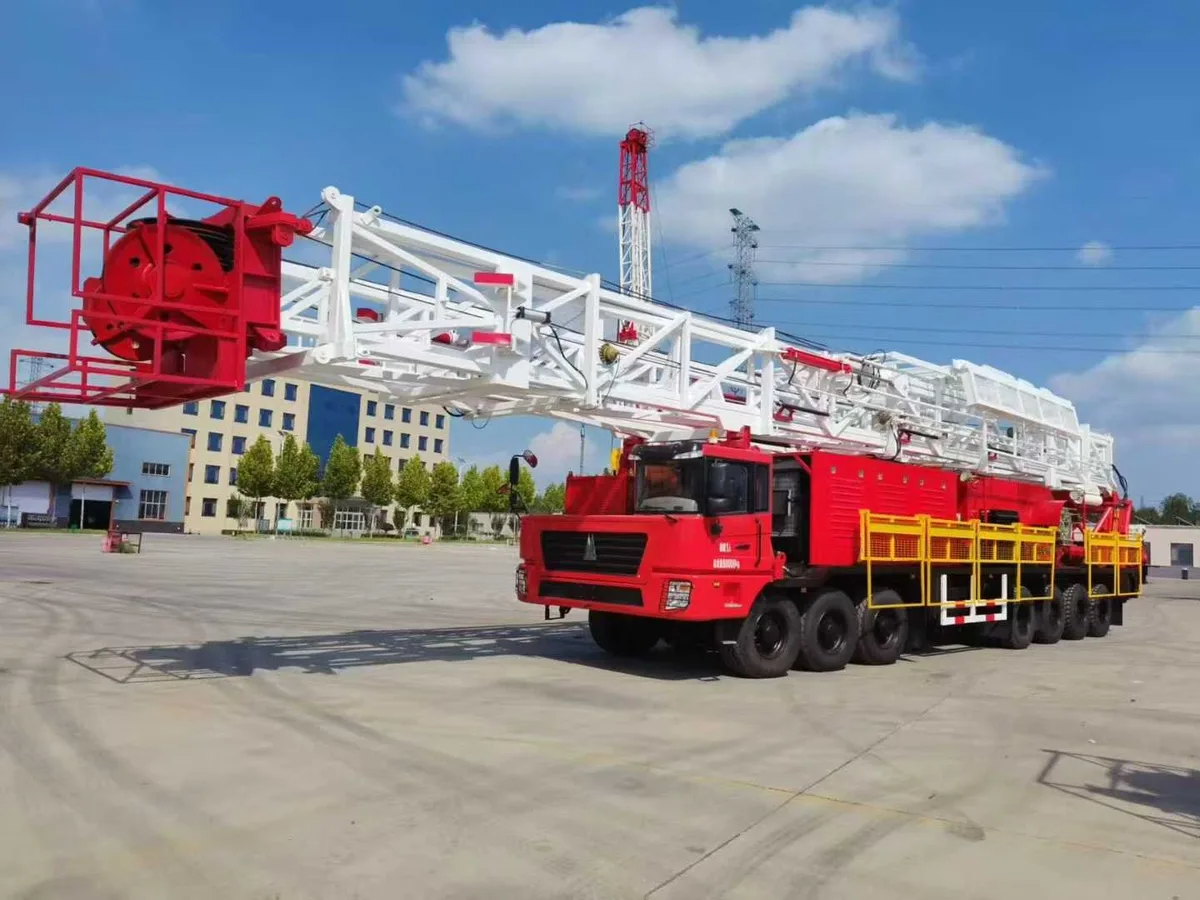
What should you check first when evaluating a workover rig manufacturer?
Start with identity and scope, then move to engineering, quality, testing and commercial terms. In practice the first screen is short:
- Legal entity and factory. The company name on the quotation, the contract and the nameplate should match, and the factory address should be one you can visit or audit by video.
- Supply boundary. A written list of what is included: rig, carrier, mast, drawworks, power package, controls, well control equipment if any, tools, spares and documents.
- Traceable specifications. Every depth figure with its tubular basis, every load figure with its rating term, and a dated revision on the specification sheet.
- Quality and test records. An inspection and test plan (ITP) for your order, and a clear statement of what will be tested before shipment and who may witness it.
- Export and support terms. Manuals, parts books, spare parts, warranty, commissioning and training, each defined in the contract rather than in a brochure.
If a supplier cannot answer these at the shortlist stage, the later steps rarely become easier. The rest of this guide explains what to ask under each heading and what a useful answer looks like.
Manufacturer, assembler or trading company: why does the difference matter?
The difference matters because it decides who is responsible for design, who can change the configuration, and who answers technical questions after delivery. A manufacturer designs and builds the rig under its own name and keeps the drawings and production records. An assembler integrates major components bought from others. A trading company or supplier sells equipment built by someone else. All three can be legitimate sources, but you should know which one you are dealing with, because the evidence you can expect differs.
What can a buyer confirm about the legal entity and factory?
Ask for the business license of the contracting entity, the factory address, and whether the factory and the contracting company are the same legal entity. A factory visit is the most direct check; if travel is not practical, a scheduled live video walk-through of the production and test areas, led by your own questions, is a reasonable substitute. Ask for export records relevant to your region only if they matter to your tender, and treat a list of “markets” on a website as target regions rather than proof of deliveries.
Which components are built in-house and which are sourced?
Ask the manufacturer for a component list that names, for each major item, the maker and model and whether it is fabricated in the factory or purchased:
| Component | What to ask | Why it matters |
|---|---|---|
| Mast and substructure | Who designs and fabricates it; structural design basis; load rating and its definition | The mast rating is a structural limit, not a sales figure |
| Drawworks and brakes | Fabricated or purchased; drum and brake specification; brake cooling | Governs hoisting control and maintenance parts |
| Traveling equipment and wire rope | Maker and rating of crown block, traveling block/hook and drilling line; certificates supplied | Primary load path alongside the mast; separate ratings and certificates |
| Carrier / chassis | Dedicated oilfield carrier or commercial truck chassis; who builds it; axle and tire makers, axle configuration | Decides mobility, axle loads and registration path |
| Engine and transmission | Brand, model and pairing for the quoted package; emission level | Decides parts availability and local service support |
| Controls, hydraulics, safety devices | Supplier of key valves and instruments; crown and floor protection devices | Decides troubleshooting and spare parts |
| Well control and tools (if included) | Maker, model, pressure rating and certificate type | Often outside the rig maker’s own scope |
A manufacturer that integrates sourced engines, transmissions and axles is common across the industry. What matters is that the boundary is written down, so that warranty and spare parts responsibility are clear.
How do you check that published specifications are traceable?
A traceable specification states the figure, its unit and the condition it was rated under, and it appears on a dated document with a revision number for the configuration being quoted. If any of those is missing, ask for it before comparing suppliers.
The most common gaps are depth figures without a tubular basis and load figures without a rating term. A depth rating changes with the tubular it is based on, and “rated”, “maximum” and “static” loads are different limits. The workover rig hook load explainer covers the load terms in detail, and the XJ650 workover rig specifications explained article shows how a depth figure and its tubing basis should be read.
| Untraceable statement | Traceable version (XJ examples from published Hubei Link specifications) | What to ask any supplier |
|---|---|---|
| “7,000 m rig” | XJ550: nominal workover depth 7,000 m with 2-7/8 in EUE tubing | Tubular type, size and weight behind the figure |
| “6,500 m rig” | XJ750: workover depth 6,500 m with 3-1/2 in drill pipe | Whether the basis is tubing or drill pipe, and its size |
| “1800 kN rig” | XJ750: 1800 kN maximum hook load | Which load term the figure is, and the load chart for the quoted configuration |
| “Built to API” | Generic: a named standard and edition, plus the certificate or license number, scope and holder | Certificate copy and an independent check with the issuing body |
| “Heavy-duty chassis” | Axle count and drive configuration, e.g. XJ750: dedicated seven-axle 14×8 | Assembled axle loads and transport mass for the quoted configuration |
Also check whether a value is standard or optional. A website or catalog may list several engines, transmissions or carrier configurations; the quotation should state which one is included, and the specification sheet should match it.
What engineering capability should the manufacturer show for your well program?
A capable manufacturer reviews your well data and answers with configuration-specific figures, not with a catalog page. When you send the well program, tubular schedule and site conditions, the engineering response should include:
- A configuration proposal that names the rig model, carrier, power package, mast and drawworks options actually quoted.
- A load comparison: your calculated peak hook load against the quoted rating, with the rating term stated.
- A depth statement on your tubular, not only on the catalog basis.
- A deviation list against your technical specification, item by item, with “comply”, “alternative” or “exception”.
- Drawings and load charts available before contract signature, at least at general-arrangement level.
The site’s workover rig solutions by well program page describes this kind of configuration review. The quality of the deviation list is often the clearest signal: a supplier that marks everything “comply” without comments may not have reviewed the specification closely.
How should chassis and carrier integration be assessed?
Treat the carrier as a separate engineering item. Ask who supplies it, whether it is a dedicated oilfield carrier or an adapted truck chassis, and what drive configuration is quoted. Drive notation such as 12×8 counts wheel ends, not tires: twelve wheel ends (a dual-tire position counts as one), eight of them driven, so a six-axle 12×8 carrier has four driven axles. It describes the driveline, not axle loads or road legality.
For each quoted configuration, request the assembled transport mass, axle-load distribution, overall transport dimensions, turning dimension and ground clearance. Keep labels exact: chassis gross vehicle weight and curb weight are ratings of the carrier; transport weight (some makers publish it as rig weight) is the mass of the complete rig as moved; maximum permissible mass is the maximum laden mass stated by the vehicle maker or the applicable regulation. They are different figures and should not be compared or subtracted without the manufacturer’s explanation. None of them proves the rig may travel on a given road; route permits and registration depend on the destination country’s rules, so confirm the registration path and any escort requirements early. The high-mobility oilfield chassis planning page covers carrier selection in more depth.
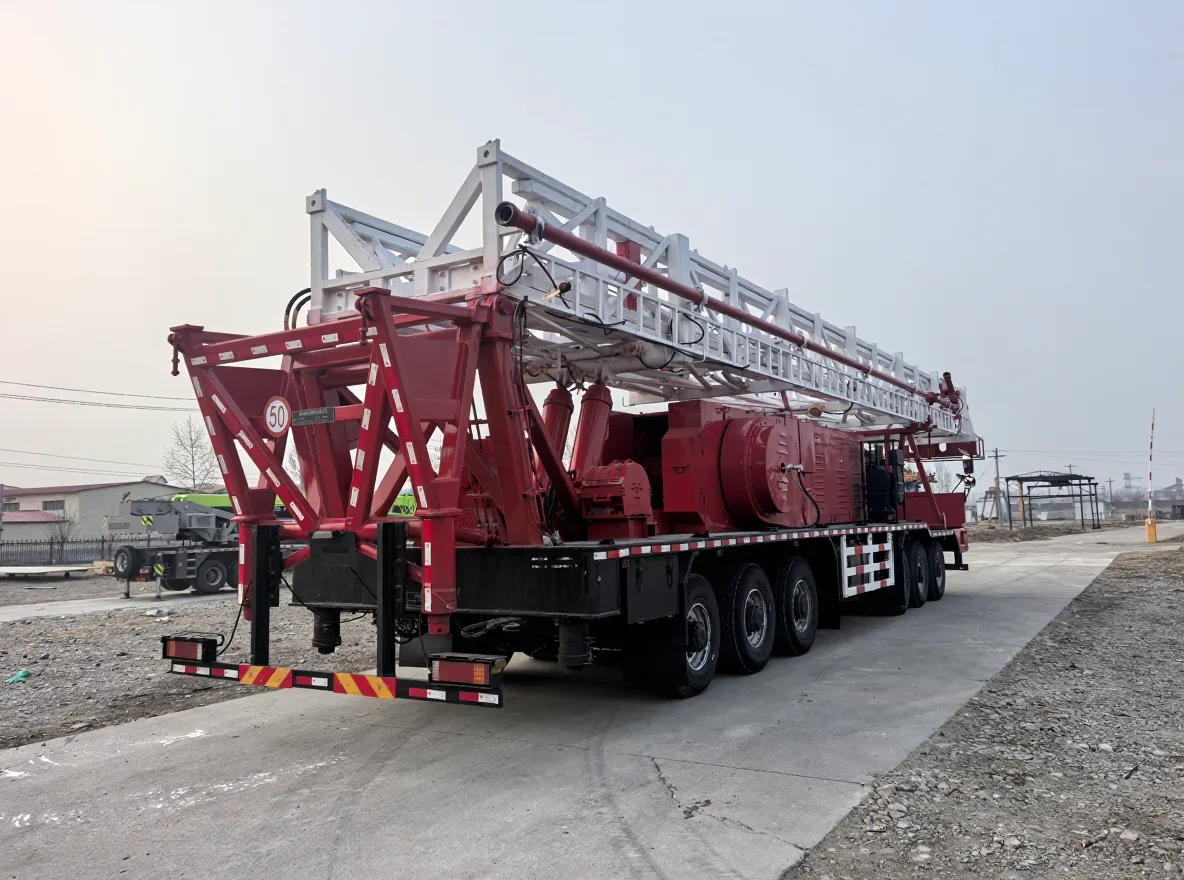
Which quality and inspection records should you request?
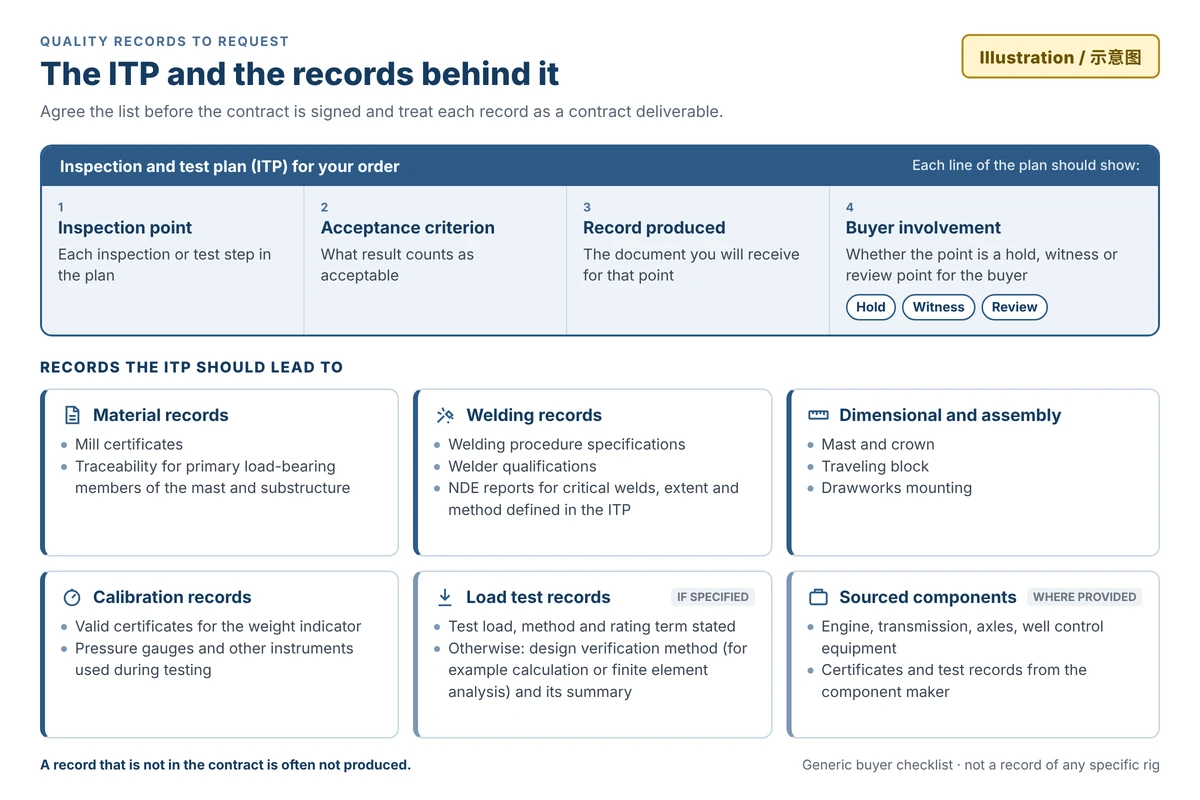
Request the records you will need to accept the rig and to maintain it, and agree the list before the contract is signed. A record that is not in the contract is often not produced. Treat the ITP, material, welding and non-destructive examination (NDE), dimensional and calibration records below as contract deliverables.
Inspection and test plan, materials and welding
- Inspection and test plan (ITP) for your order, showing each inspection point, the acceptance criterion, the record produced and whether it is a hold, witness or review point for the buyer.
- Material records: mill certificates with traceability for primary load-bearing members of the mast and substructure.
- Welding records: welding procedure specifications, welder qualifications and NDE reports for critical welds, with the extent and method defined in the ITP.
- Dimensional and assembly records for the mast, crown, traveling block and drawworks mounting.
- Calibration records: valid calibration certificates for the weight indicator, pressure gauges and other instruments used during testing.
- Load test records, where a load test is specified in the order, with the test load, method and rating term stated; otherwise the design verification method (for example calculation or finite element analysis) and its summary.
- Sourced component documents (engine, transmission, axles, well control equipment): certificates and test records where provided by the component maker.
Standards references versus certification
A reference to a standard is not the same as certification. “Designed with reference to API Spec 4F” says what the designer consulted; it does not say that the rig holds an API license or that any third party has audited it. API Specification 4F, Drilling and Well Servicing Structures, covers steel derricks, masts (including well servicing masts), substructures and crown block assemblies; API’s page for it refers to the 5th edition. It does not cover the carrier, and other API specifications apply to drawworks components (Spec 7K), traveling blocks and hooks (Spec 8C) and blowout preventers and their control systems (Specs 16A and 16D). If a supplier states that its product carries an API monogram or license, ask for the license number, the specification and the scope, and check them yourself on API’s public Composite List.
The same applies to quality management systems. Ask for a copy of any ISO 9001 certificate, then check the certificate holder, the site address, the scope wording, the issuing body and the expiry date. ISO published a revised edition, ISO 9001:2026, and withdrew the 2015 edition in September 2026, so check which edition a certificate refers to and how the holder plans the transition. A certificate held by a parent company or a different site does not cover the factory building your rig.
What should a factory acceptance test (FAT) and pre-shipment inspection cover?
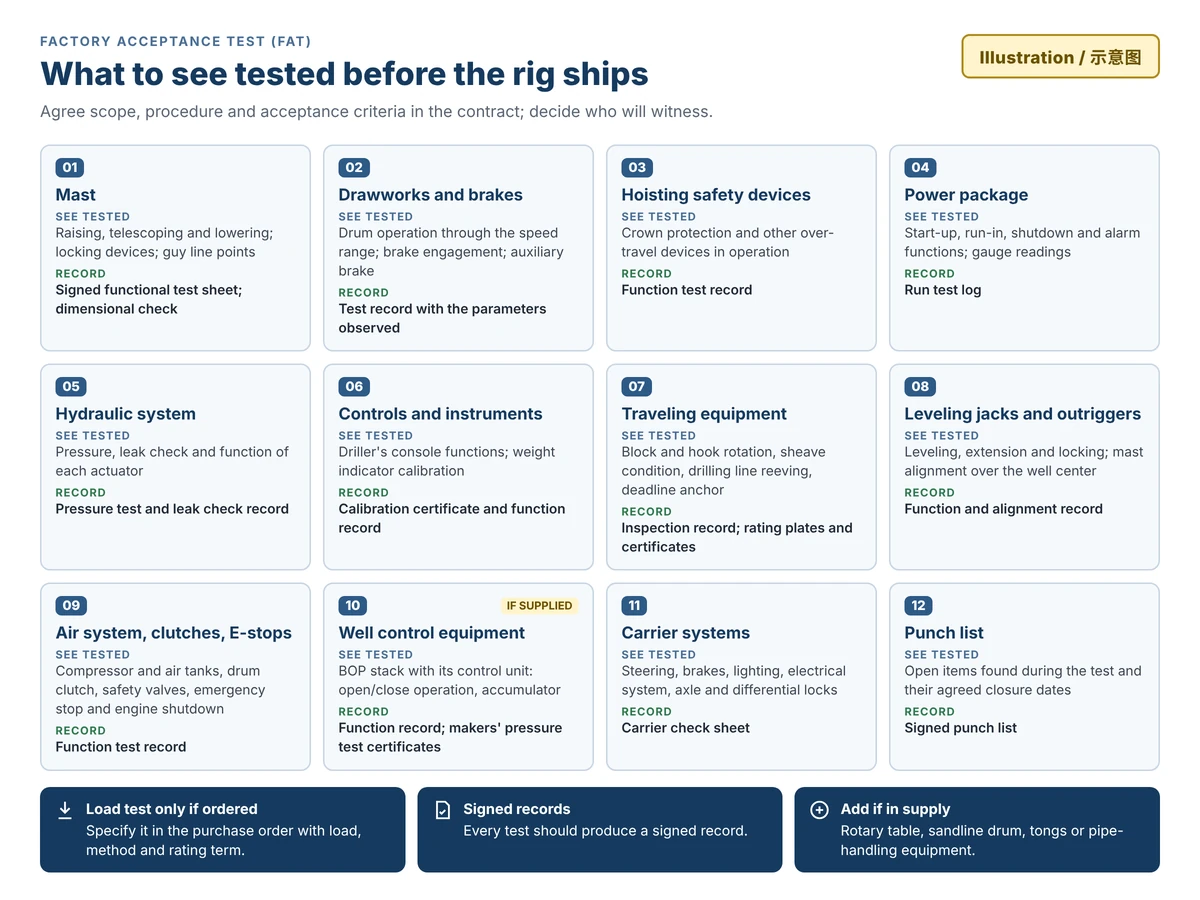
A factory acceptance test should show that the assembled rig functions as specified before it leaves the factory, and it should produce signed records. Agree the scope, the procedure and the acceptance criteria in the contract, then decide whether you, your inspector or a third-party inspection company will witness it.
| Item | What to see tested | Record to receive |
|---|---|---|
| Mast | Raising, telescoping and lowering; locking devices; guy line points | Signed functional test sheet; dimensional check |
| Drawworks and brakes | Drum operation through the speed range; brake engagement; auxiliary brake | Test record with the parameters observed |
| Hoisting safety devices | Crown protection and other over-travel devices in operation | Function test record |
| Power package | Start-up, run-in, shutdown and alarm functions; gauge readings | Run test log |
| Hydraulic system | Pressure, leak check and function of each actuator | Pressure test and leak check record |
| Controls and instruments | Driller’s console functions; weight indicator calibration | Calibration certificate and function record |
| Traveling equipment | Crown block and traveling block/hook rotation, sheave condition, drilling line reeving and deadline anchor | Inspection record; rating plates and certificates of the block, hook and wire rope |
| Leveling jacks and outriggers | Rig leveling, jack and outrigger extension and locking, mast alignment over the well center | Function and alignment record |
| Air system, clutches and emergency stops | Compressor and air tanks, drum clutch engagement, safety valves, emergency stop and engine shutdown functions | Function test record |
| Well control equipment (if supplied) | Function test of the BOP stack with its control unit (open/close operation, accumulator) | Function record; pressure test certificates from the BOP and control-unit makers |
| Carrier systems | Steering, brakes, lighting and electrical system (including hazardous-area equipment where specified), axle and differential lock functions | Carrier check sheet |
| Punch list | Open items found during the test and their agreed closure dates | Signed punch list |
Add rotary table, sandline drum, tongs or pipe-handling equipment to the FAT list if they are in the supply.
Ask whether a load test is part of the FAT, and if so at what load, with what method and against which rating term. Under API Spec 4F a proof load test is not a default requirement; if you need one, specify it in the purchase order and agree the test load with the manufacturer. A function test without load and a load test are different evidence; neither replaces the commissioning checks at the wellsite. If you are also considering a used or refurbished unit, the acceptance approach differs; see the used and refurbished workover rig inspection checklist.
Which export, documentation and after-sales terms belong in the RFQ?
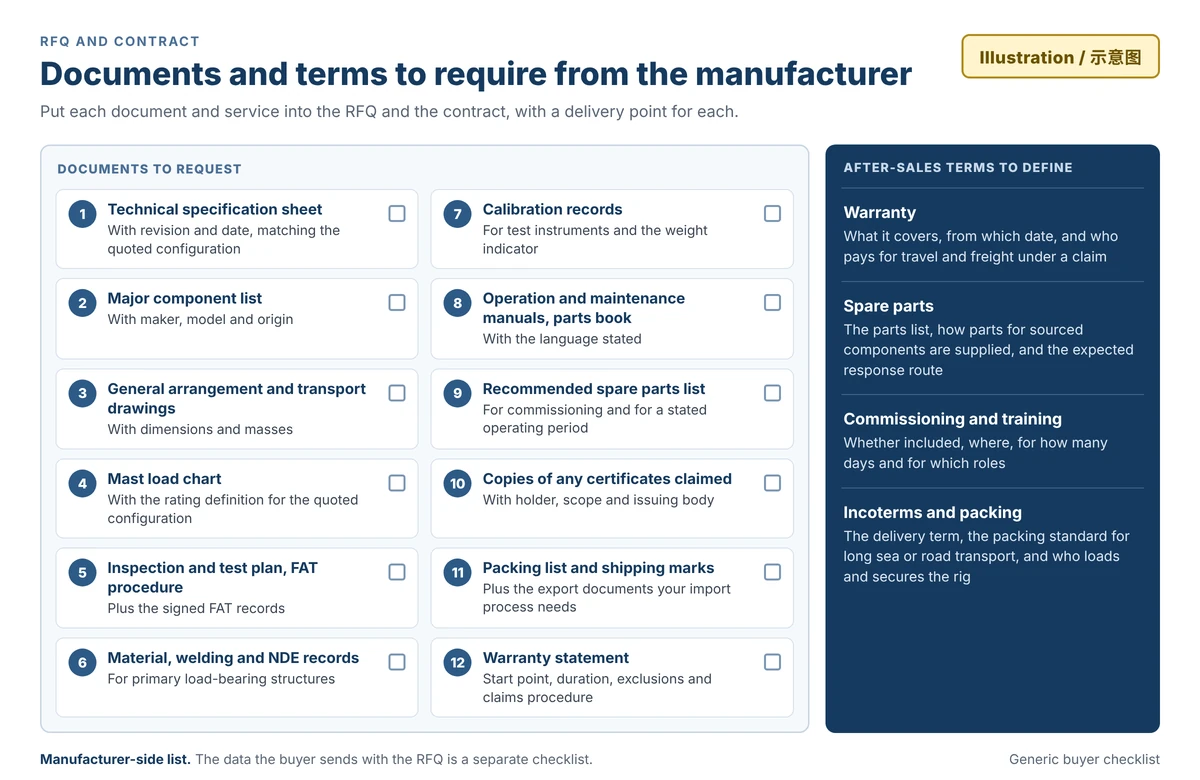
Put the documents and services you expect into the RFQ and the contract, with a delivery point for each. The buyer-side data you send is covered in the quotation checklist; this list covers what to require from the manufacturer.
Documents to request
- Technical specification sheet with revision and date, matching the quoted configuration.
- Major component list with maker, model and origin.
- General arrangement drawing and transport drawing with dimensions and masses.
- Mast load chart and rating definition for the quoted configuration.
- Inspection and test plan, FAT procedure and signed FAT records.
- Material, welding and NDE records for primary load-bearing structures.
- Calibration records for test instruments and the weight indicator.
- Operation manual, maintenance manual and parts book, with the language stated.
- Recommended spare parts list for commissioning and for a stated operating period.
- Copies of any certificates claimed, with holder, scope and issuing body.
- Packing list, shipping marks and the export documents your import process needs.
- Warranty statement, with start point, duration, exclusions and claims procedure.
After-sales terms to define
- Warranty: what it covers, from which date, and who pays for travel and freight under a claim.
- Spare parts: the parts list, how parts for sourced components are supplied, and the expected response route.
- Commissioning and training: whether they are included, where, for how many days and for which roles.
- Incoterms and packing: the delivery term, the packing standard for long sea or road transport, and who loads and secures the rig.
Manufacturer evaluation scorecard
Use this scorecard to compare shortlisted suppliers on the same basis. Score each row from the evidence received, not from the sales presentation.
| Buyer question | What to check | Evidence to request | Red flag |
|---|---|---|---|
| Who is the legal manufacturer? | Contracting entity, factory address, nameplate owner | Business license; factory visit or video audit | Names differ between quotation, contract and nameplate |
| What is built in-house? | Mast, drawworks, carrier, power package, controls | Component list with maker, model, in-house or sourced | No component list, or “brand on request” |
| Are specifications traceable? | Depth with tubular basis; load with rating term; revision date | Dated specification sheet for the quoted configuration | Bare depth or load figures |
| Does the configuration fit the well program? | Peak load, tubular, mast and racking needs | Load comparison and deviation list | Every clause marked “comply” without comment |
| Is the carrier integrated and documented? | Drive configuration, axle loads, transport mass | Transport drawing and axle-load statement | Road legality claimed from catalog dimensions |
| Which quality records come with the rig? | ITP, material, welding, NDE, calibration | Sample records from a previous build (redacted), where the manufacturer can share them | No ITP before contract |
| What does the FAT include? | Function tests, load test if any, witness rights | FAT procedure and acceptance criteria | Witnessing refused, or no signed record |
| Are certificates real and in scope? | Holder, site, scope, edition, expiry | Certificate copy; check with the issuing body | Certificate of a different entity or site |
| What documents ship with the rig? | Manuals, parts book, drawings, records | Document list in the contract | Manuals “after delivery” without a date |
| How is after-sales support defined? | Warranty, spares, commissioning, training | Written terms with response route | Support described only in general terms |
Red flags that should pause a supplier shortlist
- A depth figure without its tubular basis, or a load figure without its rating term.
- Claims of API or ISO status without a certificate number, scope and holder that you can check independently.
- No named maker and model for the engine, transmission, axles or drawworks.
- Refusal to let the buyer or a third-party inspector witness the FAT.
- A firm price quoted before any well data or site information has been asked for.
- An unclear supply boundary, especially for the carrier, well control equipment and spare parts.
- Specification sheets without a revision or date, or values that change between documents without explanation.
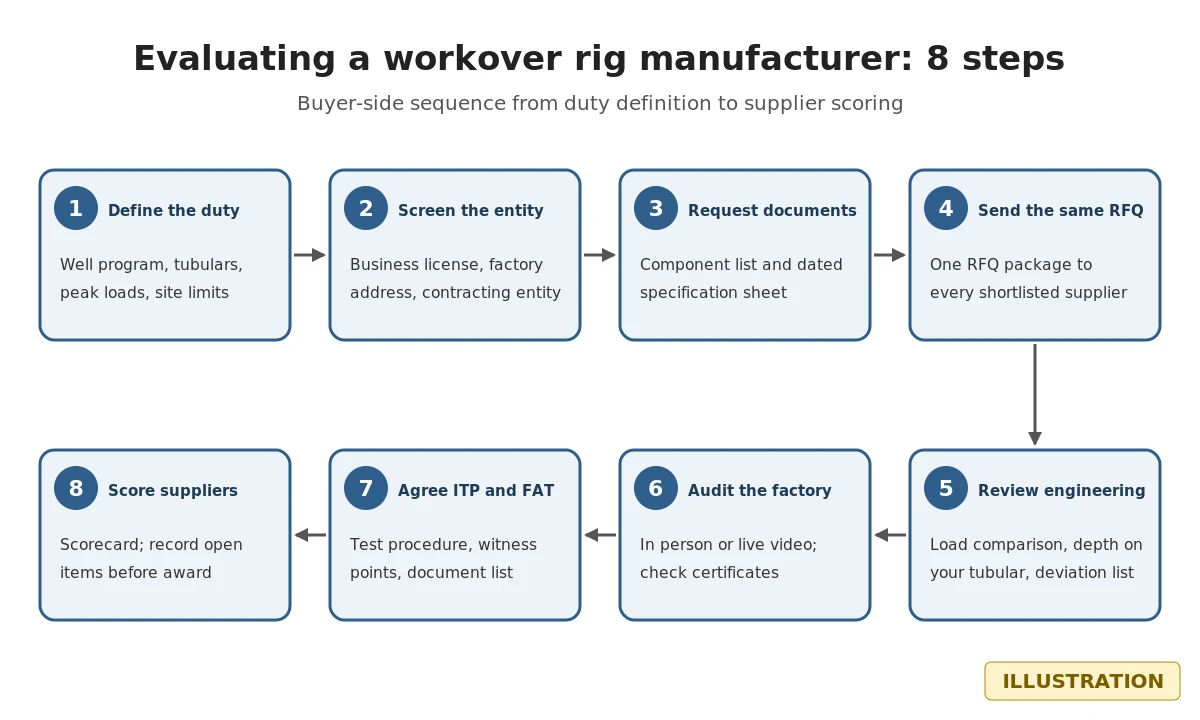
How to run the evaluation, step by step
- Define the duty. Write down the well program, tubular schedule, peak loads, site and transport limits before contacting suppliers; the rig selection guide helps with this step.
- Screen the entity. Collect the business license, factory address and contracting entity for each candidate.
- Request the component list and specification sheet for one defined configuration from each supplier.
- Send the same RFQ package to every shortlisted supplier so the answers can be compared.
- Review the engineering response: load comparison, depth statement on your tubular, deviation list and drawings.
- Audit the factory in person or by live video, and check the certificates you were given with their issuing bodies.
- Agree the ITP, FAT procedure and document list before contract signature, including witness points.
- Score each supplier with the scorecard above and record the open items that must close before award.
How does the Hubei Link XJ range fit this evaluation?
Hubei Link Petroleum Equipment Co., Ltd. is a truck-mounted workover rig manufacturer in China located at No. 888, Shiyan Air Harbor New Area, Danjiangkou City, Hubei Province, P.R. China. The XJ range covers four truck-mounted models. The table lists published values only, each with its stated basis; it is a starting point for the configuration review described above, not a statement of suitability for any well.
| Model | Depth figure and basis | Maximum hook load | Mast height | Carrier |
|---|---|---|---|---|
| XJ550 workover rig | Nominal workover depth 7,000 m with 2-7/8 in EUE tubing | Request per project | 34 m | Dedicated five-axle, 10×8 or 10×10 |
| XJ650 workover rig | Nominal servicing depth 8,500 m with 2-7/8 in EUE tubing | Request per project | 35 m | Dedicated six-axle 12×8 |
| XJ750 workover rig | Workover depth 6,500 m with 3-1/2 in drill pipe | 1800 kN maximum hook load | 38 m | Dedicated seven-axle 14×8 |
| XJ1000 workover rig | Workover depth 7,500 m with 3-1/2 in drill pipe | 2250 kN maximum hook load | 39.3 m | Dedicated seven-axle, 14×10 listed, 14×8 option |
Depth and load figures are nominal and configuration-dependent. Actual suitability depends on your well program, tubular size and weight, required hook load, operating environment and project specifications. Hook load figures for the XJ550 and XJ650, and the engine and transmission pairing for each model, are provided for the exact configuration quoted. Inspection and test scope, documentation, warranty, spare parts, commissioning and training are not described in this guide; request them in writing with any quotation, using the scorecard and document list above.
To compare the four models side by side, compare the XJ550–XJ1000 truck-mounted workover rigs. When your well data is ready, request a configuration review with your well depth, tubular size, expected hook load, operating country and site conditions.
FAQ
What is the difference between a workover rig manufacturer and a supplier?
A manufacturer designs and builds the rig under its own name and holds the drawings and production records; a workover rig supplier or trading company sells equipment built by others. Both can be valid sources. The practical difference is who answers engineering questions, who can change the configuration and who stands behind the warranty, so ask each candidate to state its role and the factory where the rig is built.
How can I check a Chinese workover rig manufacturer before visiting the factory?
Ask for the business license of the contracting entity, the factory address, a component list for the quoted configuration and a dated specification sheet. Then arrange a live video walk-through of the production and test areas, led by your own questions. Check any certificates with their issuing bodies. A site visit or third-party inspection can follow once the shortlist is smaller.
Which documents should a manufacturer provide before contract signing?
At minimum: the specification sheet with revision and date, the major component list, the general arrangement and transport drawings, the mast load chart and rating definition, the ITP and FAT procedure, and the deviation list against your technical specification. Manuals, parts books, records and certificates should be listed in the contract with a delivery point.
Does a reference to API standards mean the rig holds API certification?
No. A reference such as “designed with reference to API Spec 4F” describes the design basis the maker consulted. It is not a license and not a third-party audit. API Spec 4F also covers only the mast, substructure and crown block assembly, not the carrier, drawworks, traveling equipment or well control equipment. If a supplier states that its product carries an API monogram or license, ask for the license number, specification and scope, and check them on API’s public Composite List.
What should be witnessed during a workover rig factory acceptance test?
Mast raising and lowering, drawworks and brake operation, traveling equipment, hoisting safety devices, leveling jacks and outriggers, power package run tests, the air system, clutches and emergency stops, hydraulic pressure and leak checks, control and instrument functions, carrier systems, and a well control equipment function test if it is supplied, with the BOP and control-unit makers’ pressure test certificates. A load test is not a default requirement; if you need one, specify it in the order and agree the test load. Every test should produce a signed record, and open items should be listed on a punch list with closure dates.
Should the carrier be supplied by the rig manufacturer or separately?
Either can work, but one party should be responsible for the integrated unit. When the rig maker supplies the carrier, ask for the assembled axle loads, transport mass and transport drawing for the quoted configuration. When the carrier comes separately, define the interface, the mounting design and who is responsible for the combined transport mass and registration.
How do I compare quotations from different workover rig manufacturers?
Send every supplier the same RFQ package, ask for the same configuration detail, and compare the answers row by row with a scorecard. Compare the supply boundary, component makers, rating terms, depth basis, documents, FAT scope and after-sales terms, not only the price. A lower price with a narrower supply boundary is not necessarily the cheaper offer.
Can a manufacturer confirm suitability from well depth alone?
No. Depth alone does not set the required rig. Suitability depends on the tubular type, size and weight, the peak hook load including drag and overpull allowances, the mast and racking needs, the site and transport limits and the project specifications. Send this data with your RFQ, as described in the quotation checklist.