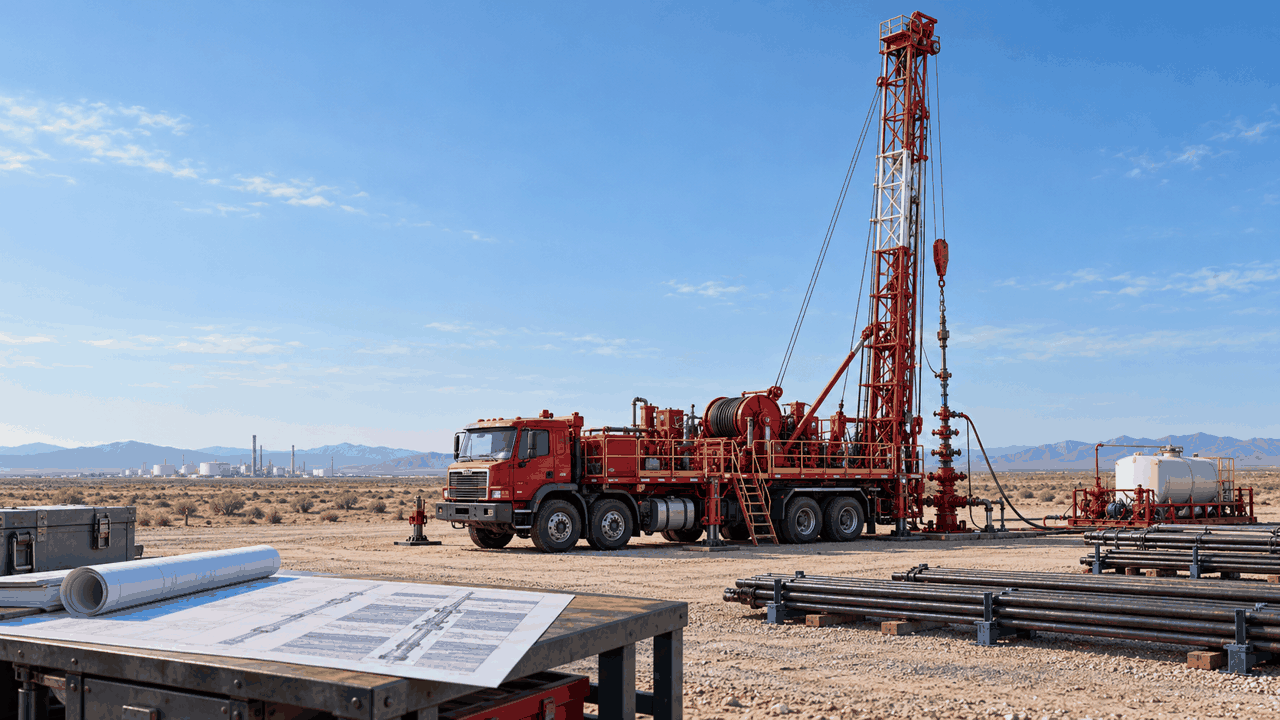
Match the rig, chassis and supporting equipment to the work your well actually requires.
A useful workover rig inquiry starts with a defined job: the equipment to be retrieved or installed, the well conditions, the anticipated loads and the constraints at the location. Hubei Link Petroleum Equipment Co., Ltd. helps procurement teams organize these requirements for a truck-mounted workover rig configuration review.
Use the well program to establish the selection basis, then compare the rig and equipment package against that basis. The final configuration should follow the operator's approved engineering requirements.
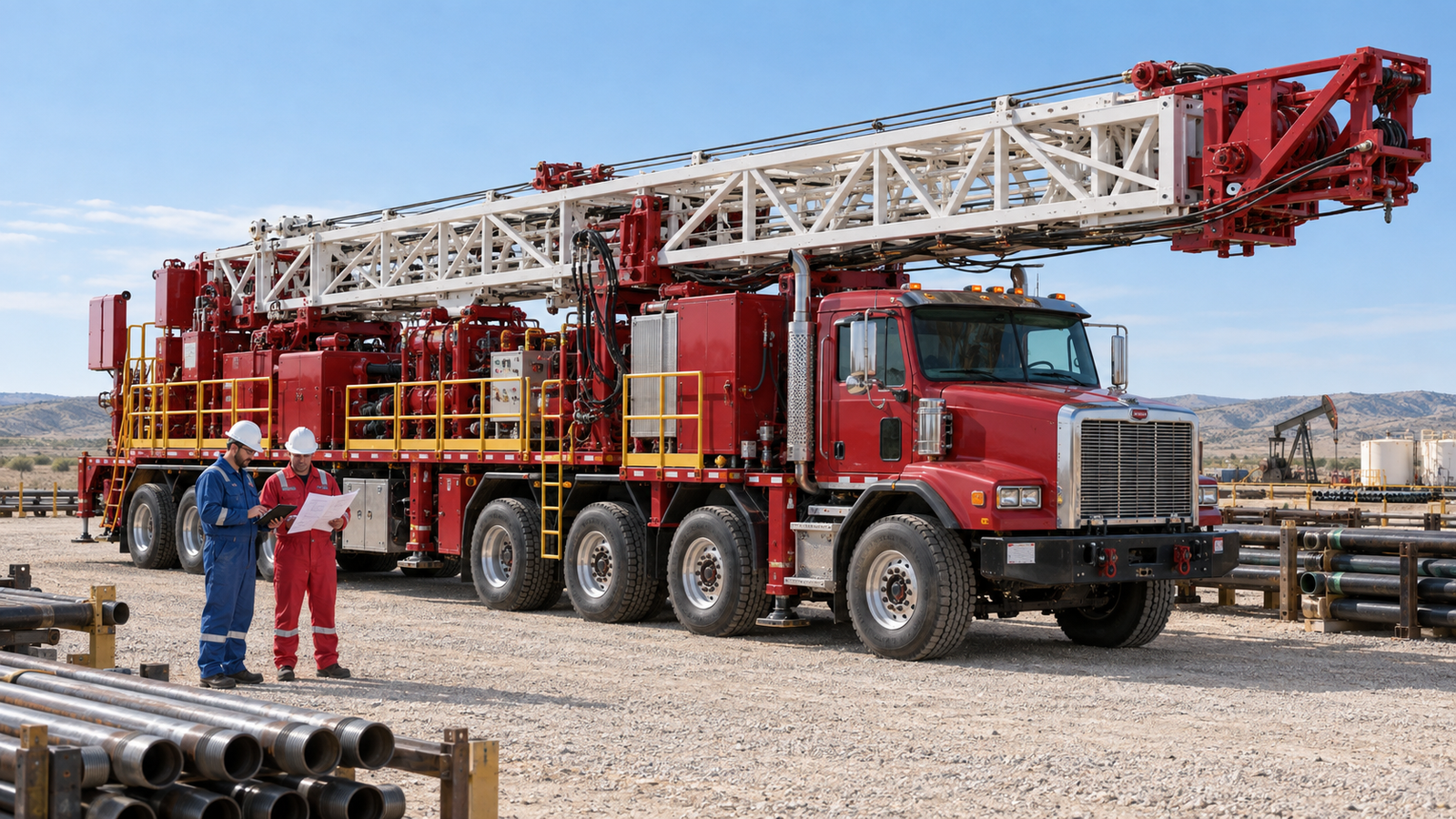
Match the equipment to the planned operation
The table below identifies the main questions to resolve for each work scope. It is a selection guide; the required equipment follows the approved program.
| Planned work | Information to confirm | Equipment focus |
|---|---|---|
| Tubing and sucker rod servicing | Tubing or rod sizes, string weights, joint lengths and planned handling method. | Hoisting system, mast clearance, compatible handling tools and work platform. |
| Completion replacement and recompletion | Completion schematic, equipment dimensions, retrieval loads and wellhead arrangement. | Hoisting envelope, completion handling, working clearance and pressure-control interfaces. |
| Cleanout and circulation work | Fluid properties, required circulation pressure and flow rate, and expected returns. | Pumping, tanks, piping and solids handling; rotary equipment where required by the program. |
| Fishing and other remedial work | Fish description, proposed tools, anticipated pulling loads, torque and circulation requirements. | Load-path limits, rotary capability where required, tool compatibility and supporting equipment. |
| Plugging and abandonment | Approved barrier design, tubular recovery scope, cement placement requirements and acceptance criteria. | Recovery and handling equipment, cementing interfaces and the agreed verification scope. |
Confirm the depth and load basis
Well depth and tubular data
State the target intervention interval, measured depth and true vertical depth in m and ft, together with tubular dimensions, unit weight and well deviation. A Nominal Workover Depth is meaningful only with its stated tubular and operating basis. Two wells with a similar depth can require different hoisting and handling arrangements.
Hook load and component limits
Provide the normal suspended load, the anticipated maximum operating hook load and any engineered overpull allowance in kN and lbf. The load review should consider the tubular string, downhole equipment, fluid buoyancy and drag as applicable. Static Hook Load ratings, hoisting performance and allowable loads for individual components describe different limits; they should be checked together for the proposed configuration.


Build the required equipment package
Rig and hoisting system
Review the mast, drawworks, reeving, brakes, hook and travelling block against the required load cases and operating duty.
Tubular handling and rotary equipment
Match elevators, slips, tongs and handling clearances to the actual tubulars. Specify rotary drive, torque and speed only where the job requires them.
Circulation and fluid management
Define pump duty, tank volume, fluid compatibility and return handling. Include a solids control system when the planned returns require separation and treatment.
Well control and equipment interfaces
Have the responsible well-control engineer define the required pressure-control package. Review pressure and temperature ratings, bore and connection sizes, fluid service and physical clearances. Rig hook-load capacity does not define a BOP pressure rating.
Cementing and other specialist equipment
Specify cementing equipment when the approved work includes cement placement. Define stimulation or fracturing equipment as a separate service scope when required.
Chassis and field support
Review road access, axle loads, transport dimensions, ground support, rig-up space, climate, fuel quality and maintenance access alongside the well requirements.
Review the XJ model against the job
Compare the XJ550, XJ650, XJ750 and XJ1000 model pages with the confirmed selection basis. Ask for a project-specific configuration and a dated technical datasheet covering the proposed rig, chassis and options. Record any differences from the inquiry so the procurement team can assess the offers on the same basis.
XJ550 Workover RigXJ650 Workover RigXJ750 Workover RigXJ1000 Workover Rig
Related equipment: Oilfield Chassis · Cementing Equipment · Solid Control Systems
Prepare a useful configuration inquiry
| Input | Details to provide |
|---|---|
| Work scope | Planned operations, well count, work sequence, operating duty and required delivery location. |
| Well and tubular data | Completion schematic; target interval and well depths in m / ft; tubular OD in mm / in; unit weight in kg/m / lb/ft. |
| Load basis | Normal and maximum anticipated hook loads, plus the engineered overpull basis, in kN / lbf. |
| Circulation and rotary duty | Required pressure in MPa / psi and flow in L/min / US gpm; torque in kN·m / lbf·ft and speed in rpm where applicable. |
| Pressure-control requirements | Required working pressure in MPa / psi; bore and connections in mm / in; fluid service, temperature range and operator specifications. |
| Site and transport | Road and bridge limits, transport envelope in m / ft, permitted mass in kg / lb, site layout and ground conditions. |
| Environment and support | Ambient range in °C / °F, altitude in m / ft, dust, fuel, maintenance resources and spare-parts requirements. |
| Documentation and acceptance | Applicable standards and editions, inspection and test requirements, manuals, training scope and acceptance criteria. |
Define the quotation scope
Request a quotation that identifies the proposed configuration, the technical selection basis, the equipment list, supply boundaries, operator-supplied items, inspection documents and transport arrangement. Delivery time, commissioning, training, spare parts and payment terms should be stated for the specific offer.
Frequently asked questions
Can I select a workover rig from well depth alone?
Depth is one input. Tubular size and weight, completion equipment, anticipated hook loads, well geometry and the planned operations also affect the selection. Provide these together before confirming a model.
Does every intervention require a workover rig?
Some through-tubing interventions use wireline, slickline or coiled tubing. Work requiring tubing retrieval or substantial completion handling may call for a workover rig. The intervention method should be established in the approved well program.
Which supporting equipment is included in the package?
These items must be defined in the supply scope. State which equipment is required, which items are already available at the field and which interfaces must be matched. The quotation should identify included, optional and operator-supplied items.
How should API requirements be stated in the inquiry?
Identify the applicable specification, edition, component and required evidence. API Spec 4F addresses drilling and well servicing structures; API Spec 7K addresses drilling and well servicing equipment within its scope. Any compliance or certification claim must be supported by the documents for the equipment offered.
Discuss your well program
Send your well program, completion schematic, tubular data and site requirements to Hubei Link Petroleum Equipment Co., Ltd. Start with the available information and identify the inputs that still require confirmation.
Email: info@workoverrigchina.com
WhatsApp: +86 136 3626 9220
Technical references
- SLB Energy Glossary — Workover — Intervention methods and tubing retrieval context.
- SLB Energy Glossary — Hook load — Load terminology, buoyancy and wellbore effects.
- API — Monogram and APIQR latest updates — API 4F and API 7K specification names.