
When we develop a cold climate workover rig solution, we address two questions: can the rig safely perform the planned well intervention, and can the complete package start, travel, lift, circulate and remain serviceable at the confirmed winter temperature? We use the well program and tubular load to determine the rig class, then use temperature, snow, ice, winter fuel, route conditions and local maintenance capability to define the adaptation package.
At Hubei Link Petroleum Equipment Co., Ltd., we review the workover rig, chassis, power system, fluids, heating, auxiliary equipment and field-support scope as one coordinated package. Final configuration depends on the confirmed well program and operating conditions.
Send us your minimum ambient temperature, well depth, tubular size, operating country or region, road conditions and new/refurbished/used preference.
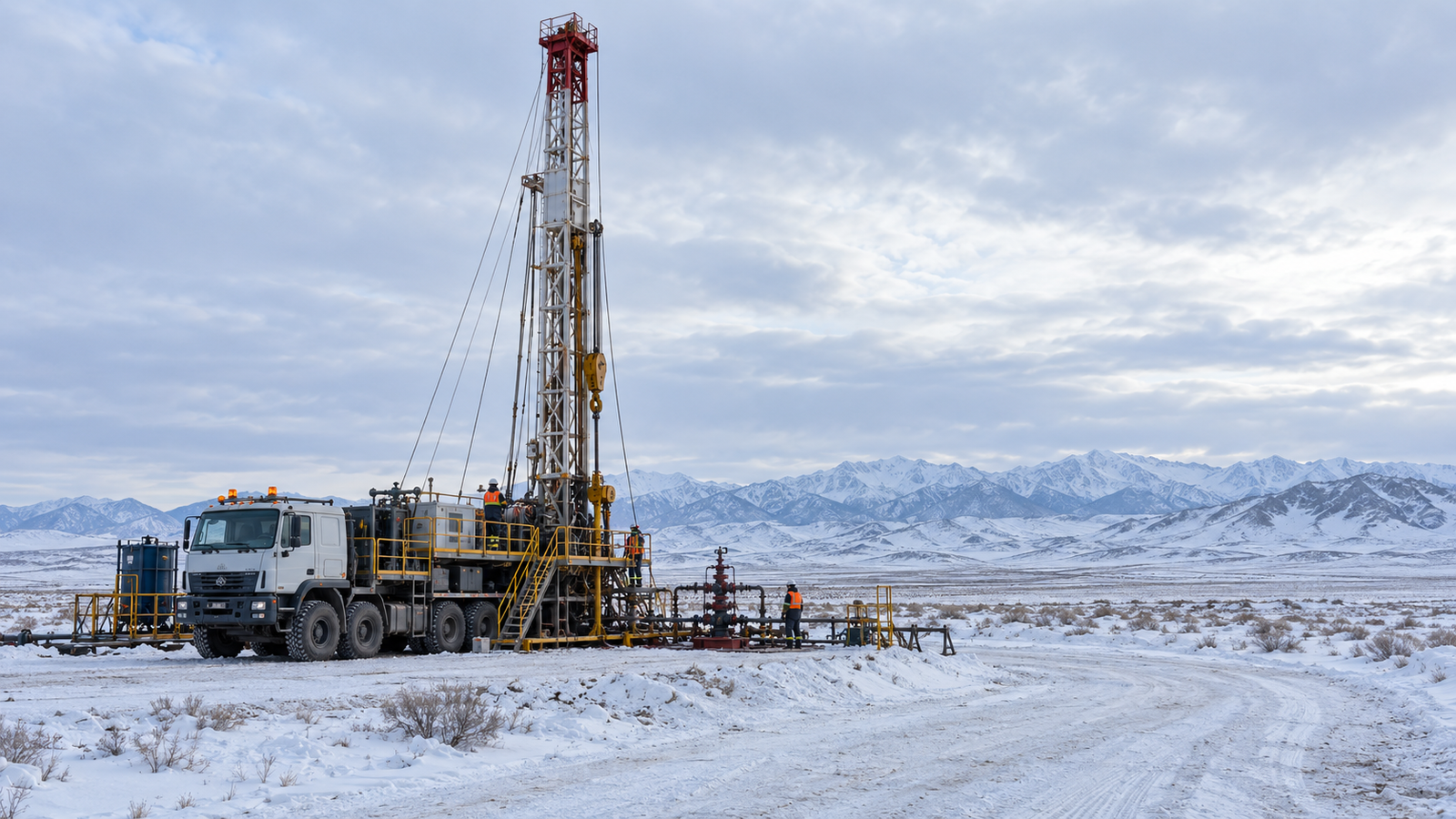
Why Cold Climate Workover Operations Need a System-Level Solution
We do not consider a workover rig ready for winter service simply because the engine can start. Low temperature affects lubricant viscosity, battery output, hydraulic response, seal flexibility, fuel behavior and pneumatic-system moisture control. Snow and ice also affect traction, braking, site access, setup, operator safety and mobilization time.
- The lifting system must match the tubular program and calculated hook-load case.
- The chassis must match the mounted mass, winter route, snow depth, gradients and road restrictions.
- The power, hydraulic, fuel, electrical and pneumatic systems must be specified for the confirmed temperature range.
- The package must remain maintainable where parts, heated workshop space and specialist technicians may be limited.
Operating Conditions We Confirm Before Selection
We do not select a model from well depth or horsepower alone. Before finalizing a technical proposal, we confirm:
Well and lifting inputs
- planned workover depth and operation type;
- tubing or drill-pipe diameter, grade, connection, unit weight and string length;
- tool string, fluids, buoyancy, expected overpull, dynamic allowance and project margin;
- required hook load, mast capacity, drawworks duty and lifting-speed requirement; and
- well-control, circulation, rotary and pipe-handling requirements.
Climate, route and support inputs
- minimum starting, operating, standby and storage temperatures;
- altitude, wind, snowfall, icing and freeze-thaw exposure;
- winter-road surface, snow depth, gradients, bridges, gates and turning space;
- transport dimensions, axle-load limits and mobilization distance;
- winter diesel grade, fuel cleanliness and water-control practices;
- available low-temperature fluids, filters, batteries, tires, hoses, seals and technicians; and
- budget and whether new, refurbished or used equipment is acceptable.
How We Select a Cold Climate Workover Rig
- Calculate the load case. We establish string weight and the credible maximum operating load before comparing models.
- Select the rig and mast as a system. We check the source-defined hook-load term, mast capacity, traveling system, drawworks power and braking arrangement.
- Check winter mobility. We evaluate the complete vehicle—not only the drive notation—against snow, ice, gradients, axle limits and turning restrictions.
- Define the temperature envelope. We separate cold starting, continuous operation, standby and storage conditions.
- Specify the low-temperature package. We confirm fluids, heating, batteries, fuel treatment, seals, hoses, air drying, cab heating and controls with the selected component suppliers.
- Complete the field package. We coordinate well-control, circulation, solids control, power, lighting, shelters, spares and maintenance tools.
We do not add a generic “winter package” after choosing the base rig. We check the temperature requirement against every temperature-sensitive subsystem in the final bill of materials.
XJ550, XJ650, XJ750 and XJ1000 Selection Relationship
| Model | Source-listed depth basis | Hook / mast reference | Power and mast reference | Listed chassis |
|---|---|---|---|---|
| XJ550 | 7,000 m with 2-7/8 in EUE tubing | 1,000 kN rated hook; 1,350 kN mast static load | 550 hp / 540 hp installed power; 34 m mast | 10×8 or 10×10 |
| XJ650 | 8,500 m with 2-7/8 in external-upset tubing | 1,200 kN rated hook; 1,575 kN maximum static load | 700 hp installed power; 35 m mast | 12×8 |
| XJ750 | 6,500 m with 3-1/2 in drill pipe | 1,800 kN maximum hook load | Two 540 hp or 550 hp engines; 750 hp drawworks; 38 m mast | 14×8 |
| XJ1000 | 7,500 m with 3-1/2 in drill pipe | 2,250 kN maximum hook load | 630 HP × 2; 1,000 hp drawworks; 39.3 m mast | 14×10 |
Depth values are tied to the stated tubular basis. Rated hook load, maximum hook load and mast static load are different source terms and are not interchangeable.
XJ550
We may evaluate XJ550 for a 2-7/8 in EUE tubing program when the calculated requirement remains within its source-listed 1,000 kN rated hook load. We compare its 10×8 and 10×10 options only after reviewing the complete vehicle and winter route.
XJ650
We consider XJ650 when the project needs a higher source-listed rated hook-load reference of 1,200 kN. Its 8,500 m depth value is tied to 2-7/8 in external-upset tubing, so we recalculate the load case for a different string.
XJ750
We move to XJ750 when a heavier 3-1/2 in drill-pipe program or tool load requires the higher-capacity branch. Its source reference lists 6,500 m workover depth and 1,800 kN maximum hook load.
XJ1000
We evaluate XJ1000 for the highest-capacity branch in this comparison. Its source data lists 7,500 m workover depth with 3-1/2 in drill pipe and 2,250 kN maximum hook load. The 14×10 chassis and multi-engine arrangement require careful review of route access, winter fuel supply, cold starting and field maintenance.
Our current model references do not confirm a model-specific minimum operating temperature. We confirm the low-temperature design value and component package in the project technical proposal.
Chassis Selection for Snow, Ice and Winter Roads
We balance traction with axle loading, steering, braking, tire availability, overall dimensions and maintenance capability. Drive notation alone does not prove snow performance or road legality.
10×8 and 10×10 for XJ550
We may consider 10×10 where the route study supports a greater traction requirement, while 10×8 may suit projects governed by road travel, turning, weight distribution or maintenance simplicity. Final selection uses integrated vehicle data.
12×8, 14×8 and 14×10
The supplied references associate XJ650 with 12×8, XJ750 with 14×8 and XJ1000 with 14×10. We check length, width, height, mass, turning envelope and legal axle loads against winter roads, bridges, access gates and recovery equipment.
When an 8×8 chassis is discussed
We may consider an 8×8 oilfield chassis for other mobile oilfield equipment or a different rig concept. We do not assume compatibility with XJ550–XJ1000 without confirmed payload, frame, wheelbase, axle, stability and packaging data.
Cold Climate Adaptation Package
| Operating condition | Engineering review | Configuration direction |
|---|---|---|
| Cold starting | Engine, coolant, lubricants, batteries and starting system | Heating and start-assist arrangement confirmed for the selected engine and temperature |
| Low-temperature hydraulics | Fluid viscosity, pumps, valves, cylinders, hoses and seals | Supplier-approved fluid and component ratings for start-up and continuous duty |
| Winter diesel | Fuel grade, low-temperature behavior, water and contamination | Project-specific filtration, water separation and heating strategy |
| Pneumatic freezing | Moisture, air drying, reservoirs and brake/control circuits | Drainage, drying and freeze-prevention measures matched to the system |
| Snow and ice | Traction, braking, tires, access and recovery | Route-specific tire, recovery and operating procedure |
| Remote maintenance | Heated service space, parts, fluids, tools and technician access | Winter spares, consumables, diagnostic tools and maintenance plan |
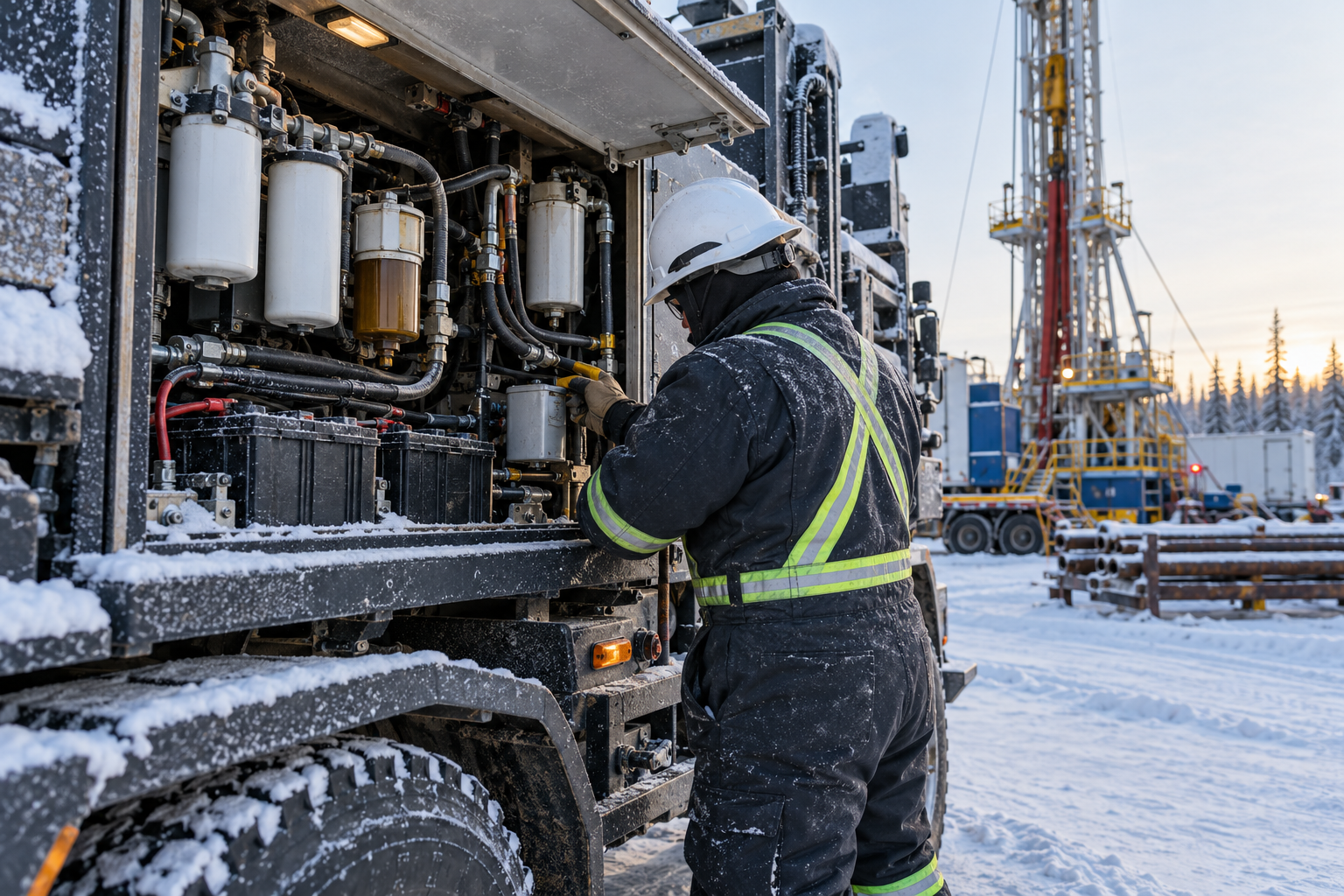
Complete Cold Climate Workover Equipment Package
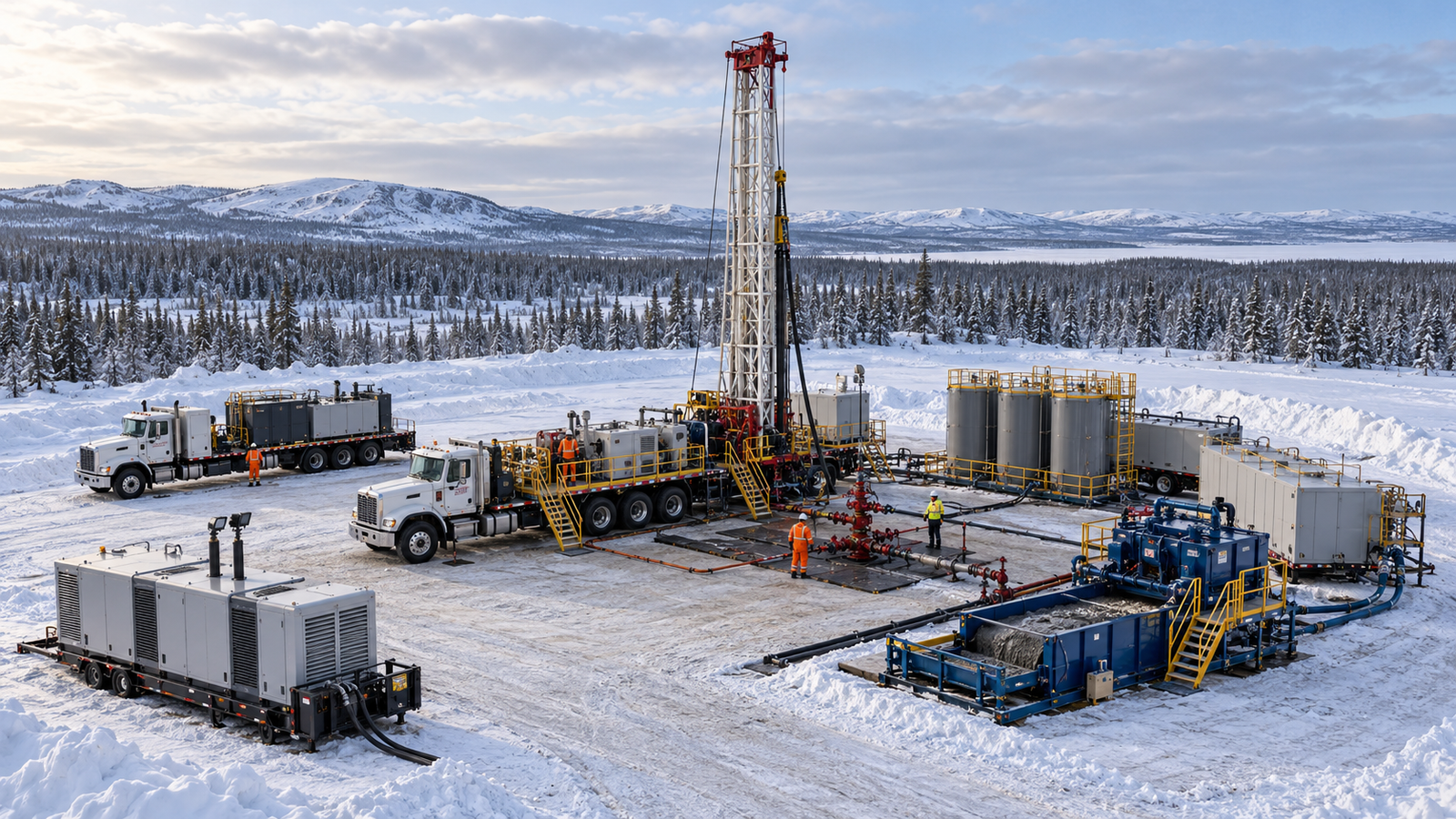
We combine the base rig with mobility, heating, well-control, fluid-handling and field-support equipment. Before quotation, we define scope boundaries so interfaces and power demands are clear.
| Package group | Typical scope | Selection basis |
|---|---|---|
| Base rig | Power system, drawworks, mast, traveling system, brakes and controls | Well program, calculated loads and duty cycle |
| Carrier | Chassis, tires, steering, braking, recovery and road equipment | Mounted mass, winter route and transport limits |
| Cold-climate preparation | Heating, fluids, batteries, fuel treatment, sealing and insulation | Confirmed starting, operating, standby and storage temperatures |
| Work floor and handling | Platform, pipe racks, catwalk, handling tools, lighting and anti-slip measures | Tubular program, site layout and winter safety plan |
| Well control | BOP system, control unit, manifolds and connections | Approved well-control program and project requirements |
| Circulation and solids control | Pumps, tanks, lines and solids-control equipment | Fluid program, flow rate, heat tracing or insulation requirements |
| Utilities and support | Generators, lighting, shelters, heating, fuel handling, spares and tools | Site infrastructure and local maintenance capability |
Optional Equipment We Review
- engine, coolant or lubricant preheating;
- battery heating or increased battery reserve;
- heated and insulated control areas;
- fuel and fluid heating or heat tracing;
- wind screens, shelters and anti-slip work surfaces; and
- winter spares, consumables and service tools.
Each option is subject to engineering confirmation for the selected components, temperature envelope and site safety requirements.
New, Refurbished or Used Equipment
New equipment offers the clearest path to a project-specific low-temperature bill of materials. We may also evaluate refurbished or used workover equipment for budget or schedule objectives, but original data does not confirm present winter capability. We review serial-number records, age, maintenance history, structural condition, powertrain, hydraulic hoses and seals, wiring, batteries, heaters, fluids, test records and the written refurbishment scope before reconfirming suitability.
Cold Climate Workover Rig Selection Table
| Operating trigger | Initial direction | What changes the decision |
|---|---|---|
| 2-7/8 in EUE tubing; load within 1,000 kN rated hook | XJ550 with 10×8 or 10×10 review | Actual load, winter route, axle distribution and temperature package |
| Higher tubing-based requirement within 1,200 kN rated hook | XJ650 with 12×8 review | Tubular basis, mast load, route dimensions, winter starting and support |
| Heavier 3-1/2 in drill-pipe program near the 6,500 m source basis | XJ750 with 14×8 review | Maximum load, power demand, road access and multi-engine support |
| High-capacity 3-1/2 in drill-pipe program near the 7,500 m source basis | XJ1000 with 14×10 review | Load, transport envelope, fuel supply, cold starting and maintenance |
| Deep snow, ice or seasonal winter roads | Chassis-led review across suitable rig classes | Route survey, tires, recovery plan, legal limits and complete mounted mass |
Why Work with Hubei Link
At Hubei Link Petroleum Equipment Co., Ltd., our scope covers truck-mounted workover rigs, oilfield chassis, solids-control systems, workover auxiliary equipment and new, refurbished or used equipment options.
This integrated scope helps buyers review the rig, chassis, cold-climate preparation, solids-control system and auxiliary equipment as one coordinated package instead of sourcing each subsystem separately. We separate source-backed base-machine data from project-specific winter preparation and record the points that must be confirmed before quotation or refurbishment.
Frequently Asked Questions
What makes a workover rig suitable for cold climates?
We determine suitability from the confirmed temperature envelope and the ratings of the complete system: starting, power, hydraulics, fuel, batteries, seals, hoses, pneumatics, controls, heating, traction, operator protection and maintenance support.
Does cold weather change the choice between XJ550, XJ650, XJ750 and XJ1000?
We use the well load case to determine the rig class first. Cold-weather conditions then define component specifications, heating, fluids, chassis preparation and field support. A larger model is not automatically more suitable for winter conditions.
Is 10×10 always better than 10×8 on snow?
No. Driven axles are one part of winter mobility. We also review tire type, axle loading, ground pressure, braking, steering, turning space, road travel, recovery and maintenance.
What minimum temperature can the rigs operate at?
Our current source set does not confirm a model-specific minimum operating temperature. We ask for separate starting, operating, standby and storage temperatures so we can check the selected engine, fluids, batteries, hydraulic components, seals, hoses and controls.
Why is winter fuel information required?
Fuel grade, low-temperature behavior, contamination and water control affect starting and continuous operation. We match the engine and fuel-treatment arrangement to the fuel available at site.
Can used or refurbished equipment be prepared for cold climates?
Yes, subject to inspection and engineering confirmation. We define the refurbishment scope from the present condition and confirm it through documented testing.
What information is needed for an initial recommendation?
Send us the minimum ambient temperature, well depth, tubing or drill-pipe size, operating country or region, expected hook load if available, winter road and terrain conditions, and your new/refurbished/used preference.
Request an Initial Cold Climate Configuration Review
For the first review, send Hubei Link Petroleum Equipment Co., Ltd.:
- minimum ambient temperature;
- well depth;
- tubing or drill-pipe size;
- operating country and region;
- expected hook load, if available;
- winter terrain and road condition; and
- new, refurbished or used equipment preference.
We use this information to begin the model, chassis and winterization discussion. Final configuration depends on the detailed well program, component temperature ratings and transport requirements.
Optional Detailed Engineering Data
- tubular grade, connection, unit weight and string length;
- tool string, expected overpull and load allowances;
- starting, operating, standby and storage temperatures;
- altitude, wind, snowfall, icing and heated-storage availability;
- winter diesel and available fluids, batteries, filters, tires and parts;
- road, bridge, axle-load and transport-dimension limits;
- well-control, circulation, solids-control and auxiliary-equipment scope; and
- budget range and target delivery schedule.